Other skies
Indian Astronomy
Indian astronomy is a long tradition of measuring the sky: the Moon's path divided into nakshatras, a zodiac fixed to the stars, Sanskrit texts for calculating positions, and stone instruments for observing them. This page explains what each of these is, shows it with our own calculations, and says where we stop because the sources do.
The Moon's path in 27 parts
The Moon circles the sky once in about 27.3 days, moving on average about 13.2° a day. The Indian tradition divides its path into nakshatras, often called lunar mansions, and the Moon stays roughly a day in each. The division we use is 27 equal parts of 13°20′, each split into four padas of 3°20′.
Some Vedic texts list 27 nakshatras and others add Abhijit, which makes 28, and scholars disagree about which count came first. The astrological division into 27 equal parts is the one used for calculation. You can find the nakshatra of any date with the nakshatra calculator.
A zodiac fixed to the stars
Western astrology measures the zodiac from the March equinox, which slowly moves against the stars because of the precession of the equinoxes: about 50 arcseconds a year, one full turn in about 26,000 years. Indian astronomy fixes the zero point to the stars instead, and the offset between the two is called the ayanamsa. With the Lahiri ayanamsa it was 24°13′ on January 1, 2026.
The figure shows both zodiacs on January 1, 2026. The outer ring is the tropical zodiac with the Sun at its position that day, and the inner ring is the sidereal zodiac, shifted by the ayanamsa. The twelve rashi are equal parts of 30°, not the constellations with their official boundaries.
Stars and nakshatras
Each nakshatra is tied to a star or group of stars, its yogatara. For six of them the identification is the same in every source we saw: Aldebaran, Betelgeuse, Regulus, Spica, Arcturus and Antares. Our calculation shows that three of those lie slightly outside the equal part of the nakshatra they belong to. The ring and the numbers are on the page about Vedic astrology.
Calculating the sky: the siddhantas
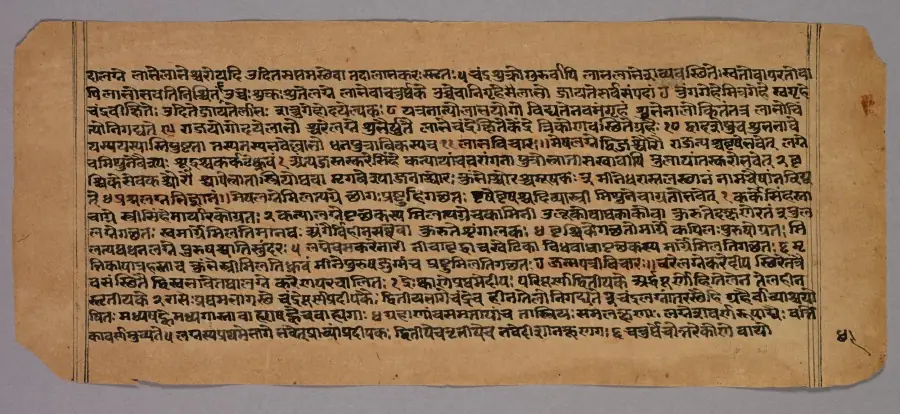
The Surya Siddhanta is a Sanskrit text for calculating the positions of the Sun, Moon and planets. In a survey of Hindu astronomy, P. Rudra notes that Varahamihira described it in the 6th century CE as one of five siddhantas, and that it was upgraded later as new knowledge accumulated. We therefore say only that it belongs to the first millennium CE and that the surviving text was revised, and we give no single year.
Ebenezer Burgess published an English translation with commentary in 1860 in the Journal of the American Oriental Society (volume 6, pages 141 to 498). It is in the public domain and it lists the position of the star that marks each nakshatra, which we plan to compare with our own calculation.
Instruments: the Jantar Mantar
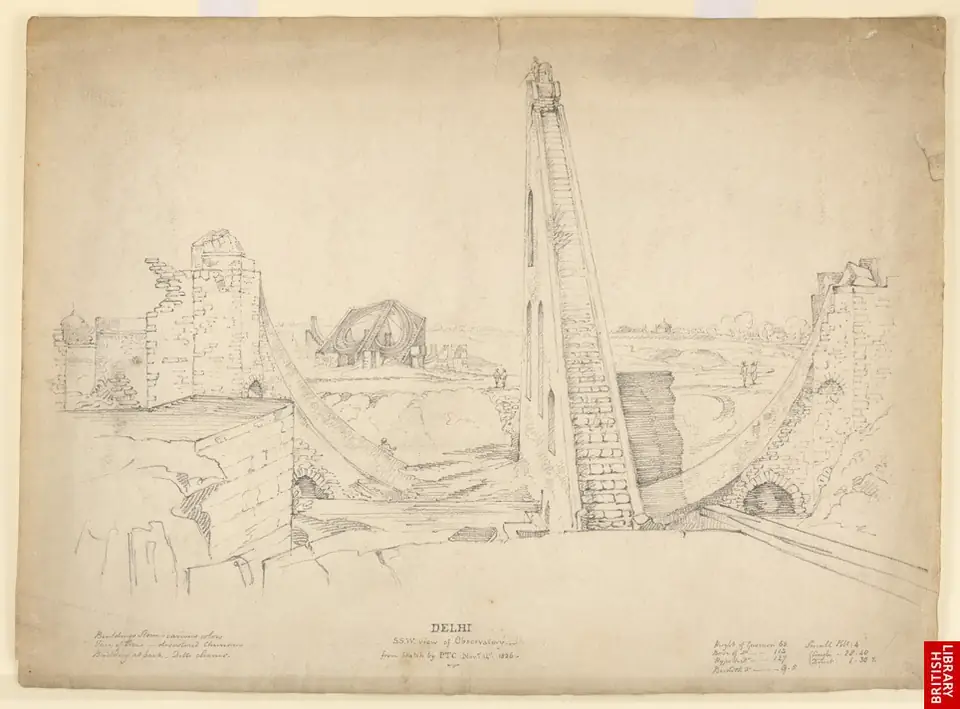
UNESCO describes the Jantar Mantar in Jaipur as an astronomical observation site built in the early 18th century, with some twenty main fixed instruments, made under the prince Jai Singh II. It was inscribed on the World Heritage List in 2010. UNESCO notes that several of the instruments are impressive in their dimensions and that some are the largest ever built in their category.


Instruments of this kind show the Sun's shadow, the hour and the position of the Sun and the stars directly on large masonry scales, with no lens and no calculation by the visitor.

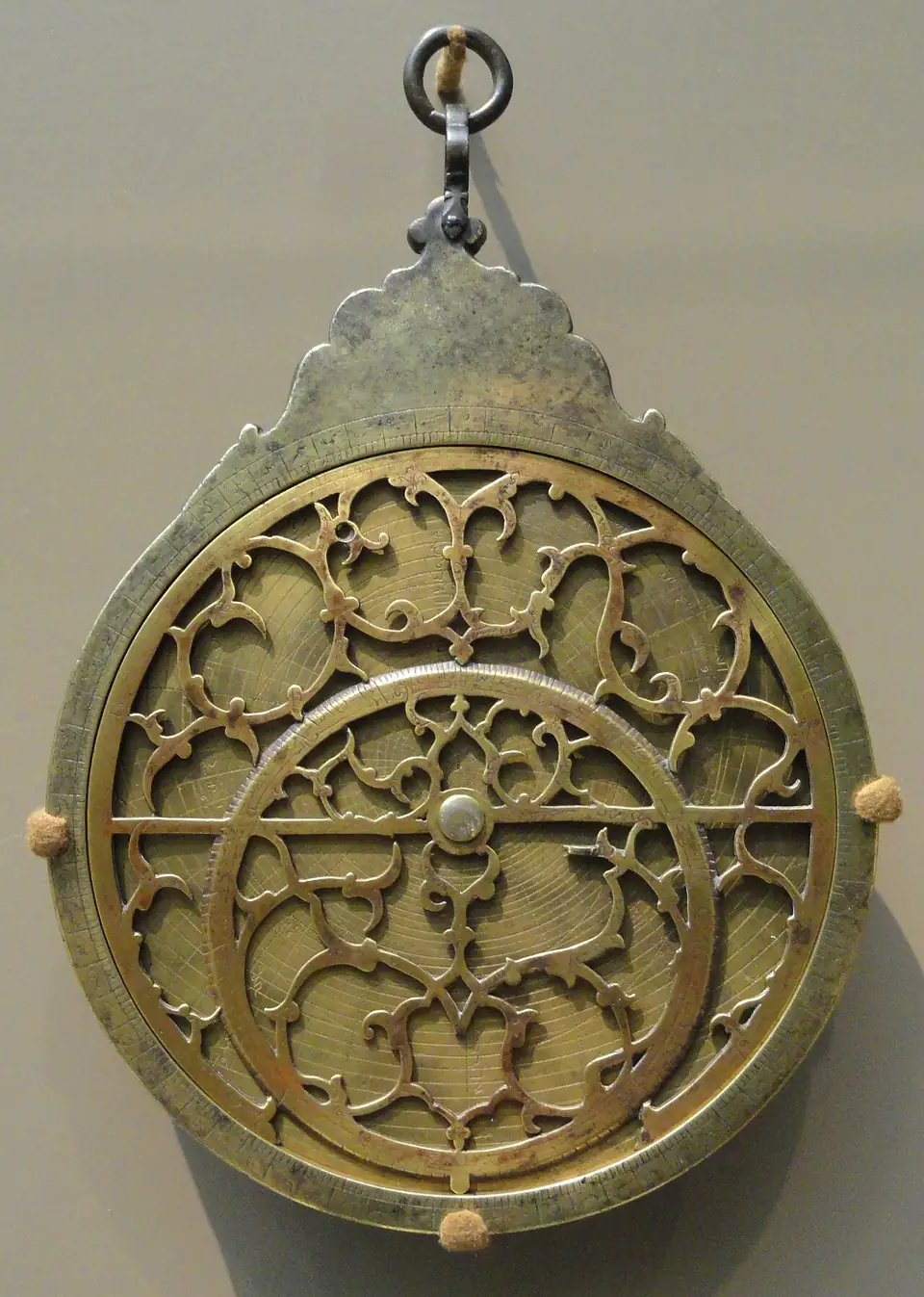
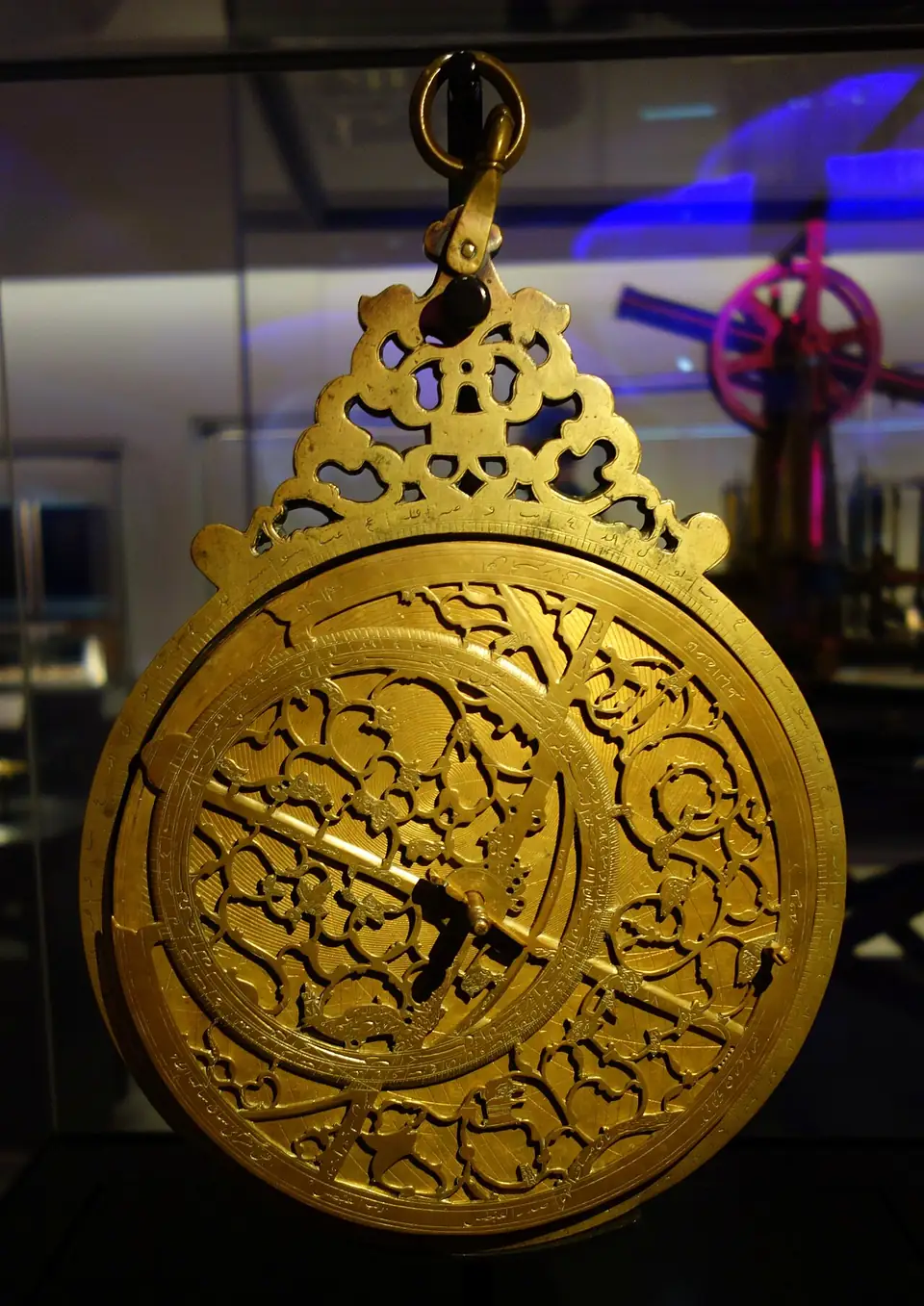
Portable instruments existed too. The two brass astrolabes below are Indo-Persian: one of about 1601 by Isa ibn Allahdad and one made in Lahore in 1666, according to the museums that hold them.


A comparison with China
The Chinese system of 28 xiu is also a division of the Moon's path, but its parts have unequal widths, measured between determinative stars, while the Indian 27 are equal. Whether the Indian and Chinese lunar mansions share an origin is debated among scholars, and we do not take a side.
On this site
- Vedic astrology: the sidereal signs, the nakshatras, the nine grahas and the ring of the zodiac.
- Nakshatra calculator: the Moon's nakshatra and pada for a birth date, time and place.
- Panchang calculator: the five parts of the Indian day from sunrise to sunrise.
- Navamsa calculator: the sign and the navamsa (D9) of the nine grahas for a birth date and time.
What we leave out
We do not date the oldest Vedic lists or the Vedanga Jyotisha, because the dates in the literature differ by centuries. We name a source for every statement, and where the sources disagree we say so.
Sources and further reading
- Kim Plofker, Mathematics in India (Princeton University Press, 2009).
- David Pingree, Jyotiḥśāstra: Astral and Mathematical Literature (Otto Harrassowitz, 1981).
- Ebenezer Burgess, Translation of the Sûrya-Siddhânta, Journal of the American Oriental Society 6 (1860), pp. 141–498 (public domain).
- UNESCO World Heritage Centre, The Jantar Mantar, Jaipur (site 1338; decision 34 COM 8B.17, 2010).
- P. Rudra, A Short History of Hindu Astronomy & Ephemeris, Physics Teacher 48, 4 (2006); arXiv:0903.1778.
- Astronomy Engine and SIMBAD (CDS, Strasbourg) for the positions in the figures.