Astrology · Arabic
Arabic astrology
Between the eighth and the eleventh century, astrologers in Baghdad and other cities of the Islamic world gathered Greek, Persian and Indian astrology, wrote it down in Arabic and passed it on to Europe. This page tells who they were, where their knowledge came from, what they did and how it reached Europe. It describes history: it makes no predictions and gives no religious advice.
Calculate it yourself, with al-Bīrūnī's rules
The three calculators follow the rules in al-Bīrūnī's Book of Instruction in the Elements of the Art of Astrology (1029), in the English translation by R. Ramsay Wright (1934). The page with the rule is given under every result.
- Arabic lots: The Lot of Fortune, the Lot of the Spirit and the five other planetary lots, by day and by night as al-Bīrūnī gives them.
- Firdaria: The planetary periods of a life: 75 years in nine periods, each planet with its seven sub-periods, by al-Bīrūnī.
- Planetary hours: Today's twelve daytime hours and twelve nighttime hours, each with its planet, for your place, as al-Bīrūnī describes them.
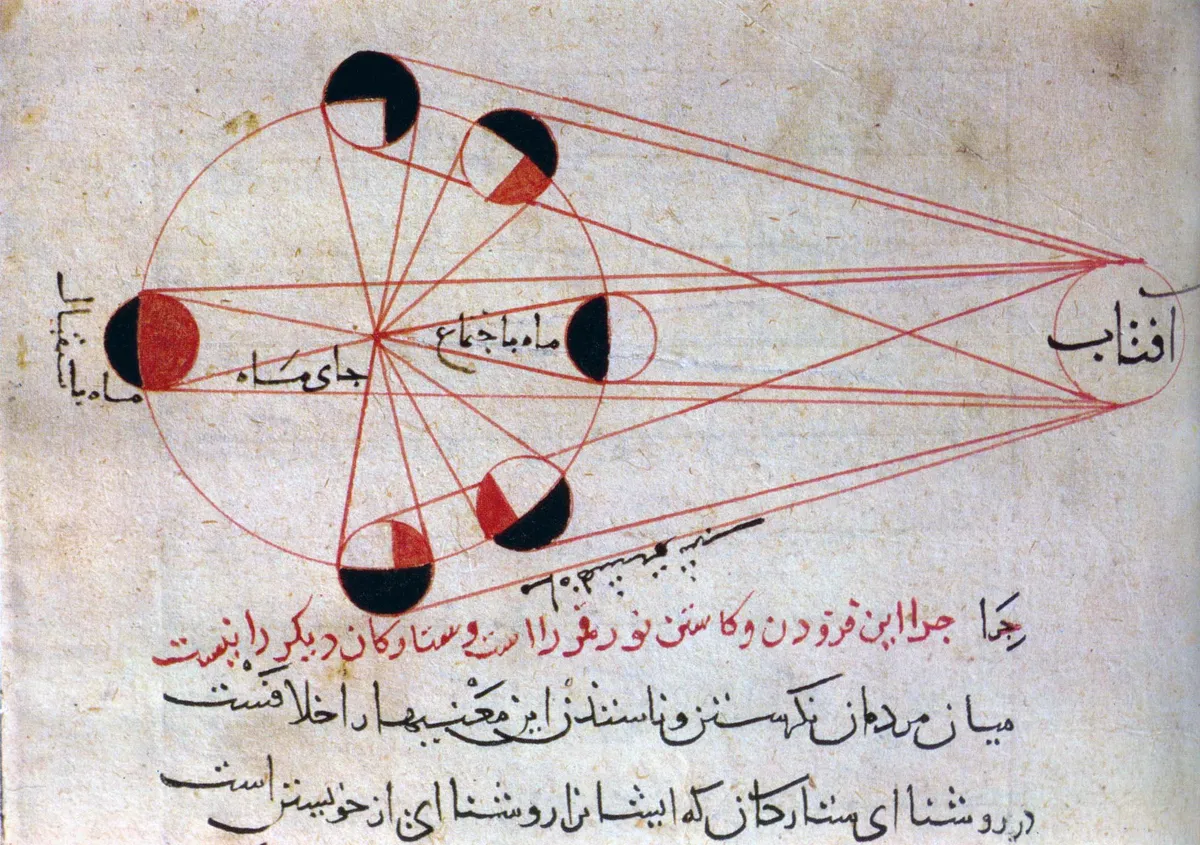
Who were the astrologers?
- Māshāʾallāh (died about 815)
- A Jewish astrologer from Basra who worked in Baghdad from the reign of the caliph al-Manṣūr to that of al-Maʾmūn. Together with al-Nawbakht he worked on the horoscope for the founding of Baghdad in 762. In Latin, he was called Messahala.
- ʿUmar ibn al-Farrukhān al-Ṭabarī (8th–9th century)
- A contemporary of Māshāʾallāh. The astrological poem of Dorotheus of Sidon had been translated into Persian in the third century; ʿUmar made the Arabic edition of it. His shorter introduction to nativities was later drawn on extensively in Europe by Guido Bonatti.
- Sahl ibn Bishr (first half of the 9th century)
- A Jewish or Syriac Christian astrologer from Tabaristan, who served as astrologer to a governor and later to a vizier in Baghdad. He wrote, among other things, on elections and on questions. In Latin, he was called Zael; John of Seville translated five of his books.
- al-Kindī (about 800 – after 866)
- The philosopher at the courts of al-Maʾmūn and al-Muʿtaṣim. Among many other subjects he wrote on astrology, and both the later Arabic and the Latin tradition knew him for those writings.
- Abū Maʿshar (Balkh, possibly 787 – Wāsiṭ, possibly 886)
- He took up astrology only at the age of 47. His Great Introduction (Kitāb al-mudkhal al-kabīr) in 106 chapters argued for astrology with philosophical proofs; it was translated into Latin in 1133 and 1140. His Book on Religions and Dynasties read history through the conjunction of Saturn and Jupiter. In Latin, he was called Albumasar.
- al-Qabīṣī (10th century)
- He dedicated several works to Sayf al-Dawla, emir of Aleppo from 945 to 967. His short Introduction to astrology survives in more than 200 Latin manuscripts and twelve printed editions (1473–1521); it was the main book used to teach astrology at medieval universities. In Latin, he was called Alcabitius.
- al-Bīrūnī (973 – about 1050)
- He was one of the greatest scholars of the Middle Ages. In 1029, in Ghazna, he wrote the Book of Instruction in the Elements of the Art of Astrology: first geometry and arithmetic, then the structure of the universe, and only then astrology, "for no one is worthy of the style and title of astrologer who is not thoroughly conversant with these four sciences".
Where did their knowledge come from?
- From Greek: the astrological poem of Dorotheus of Sidon was translated into Persian in the third century and later put into Arabic by ʿUmar ibn al-Farrukhān.
- From Persian: according to the Biographical Encyclopedia of Astronomers, the historical astrology that Abū Maʿshar wrote about came from the Sasanian tradition. The caliph al-Manṣūr introduced this kind of astrology as part of founding the new ʿAbbāsid dynasty.
- From India: in the early 770s al-Fazārī helped translate a Sanskrit astronomical text that an Indian astronomer had brought to Baghdad. He based his tables, the Zīj al-Sindhind, on that text. He also helped to cast the horoscope for the founding of Baghdad.
- From Ptolemy: Ptolemy's Tetrabiblos was translated into Arabic at least three times.
- Brought together: according to Christopher Brunner, Abū Maʿshar achieved the final synthesis in the middle of the ninth century. His theories were "basically Ptolemaic, though modified by materials of Indian, Sasanian, and Syrian (Harranian) origin," and his works set the standard for professional astrologers in Iran and throughout the rest of the Islamic world.
What did they do?
- Birth charts: astrologers judged a person's life from the position of the planets at birth. The Arabic lots and the firdaria, which you can calculate on this site, belong here.
- Elections: choosing the moment to begin something, such as founding a city. The founding horoscope of Baghdad (762) is the best-known example.
- Questions: answering a question from the sky at the moment it was asked.
- World history: the conjunction of Saturn and Jupiter, which recurs about every twenty years, was read as signs of change in dynasties and religions. We describe this only as history.
- Planetary hours: the day and the night each divided into twelve hours, each with its own planet.
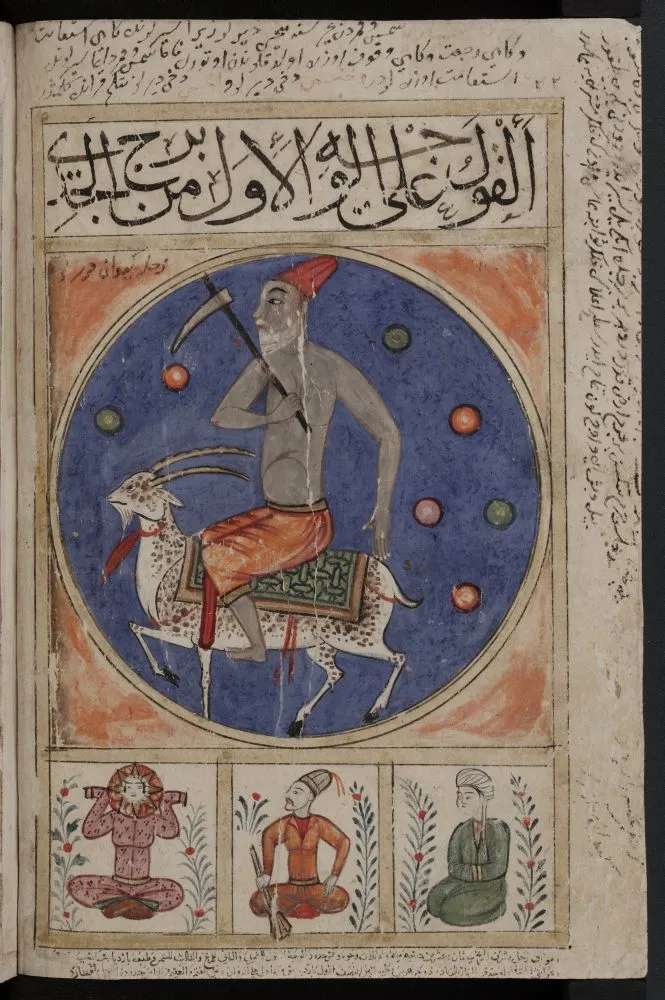

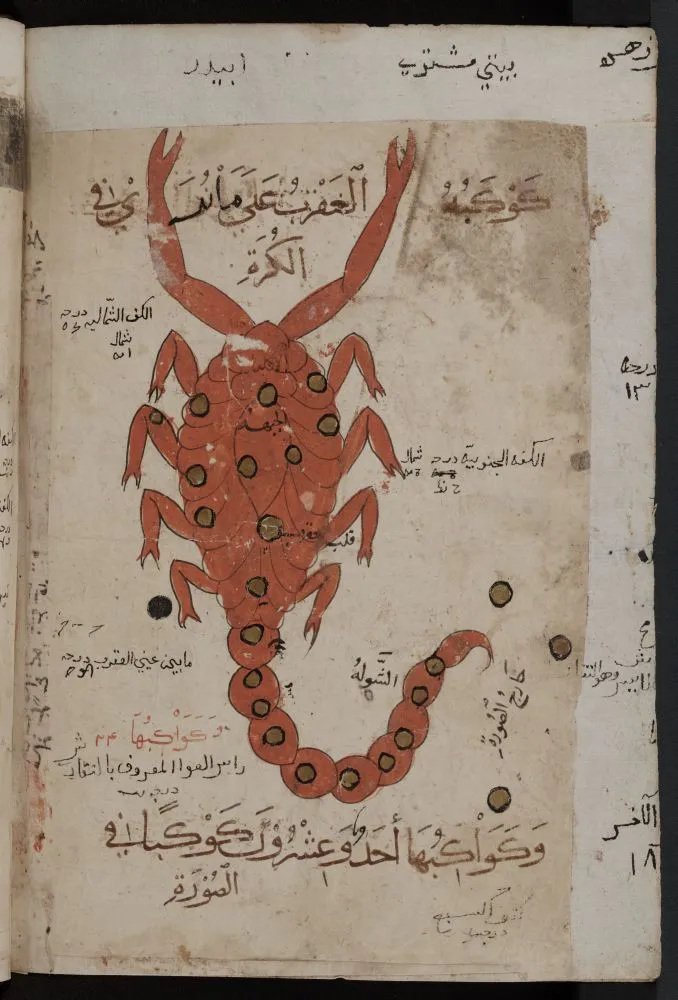

From Baghdad to Europe
- In the twelfth century the Arabic books were translated into Latin. Abū Maʿshar's Great Introduction was translated twice, in 1133 and in 1140.
- Al-Qabīṣī's Introduction, translated by John of Seville in the 1130s, became the most popular astrology book in medieval Europe. Commentaries written in Paris and Bologna in the 1320s and 1330s suggest that it was taught at the universities.
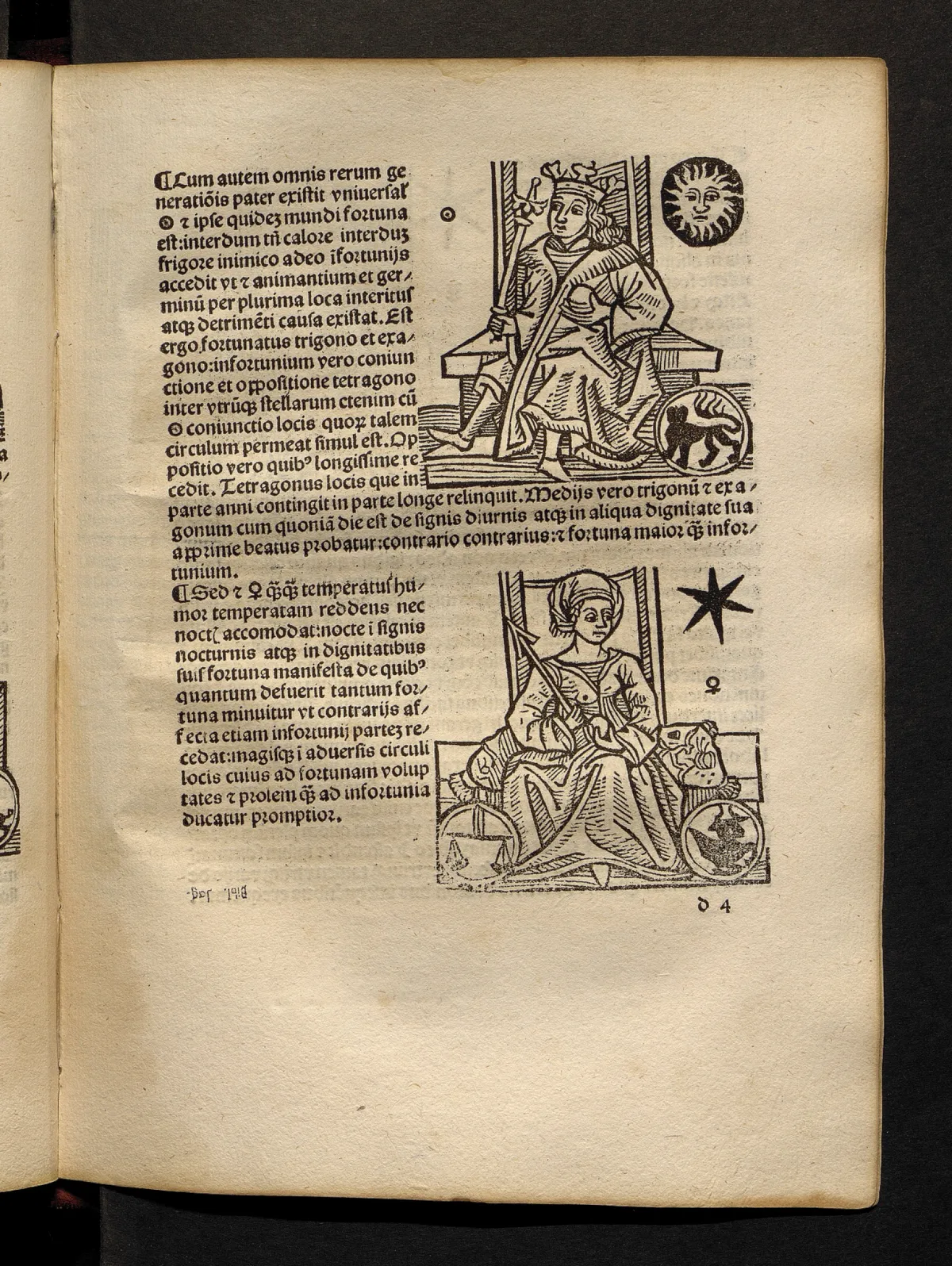
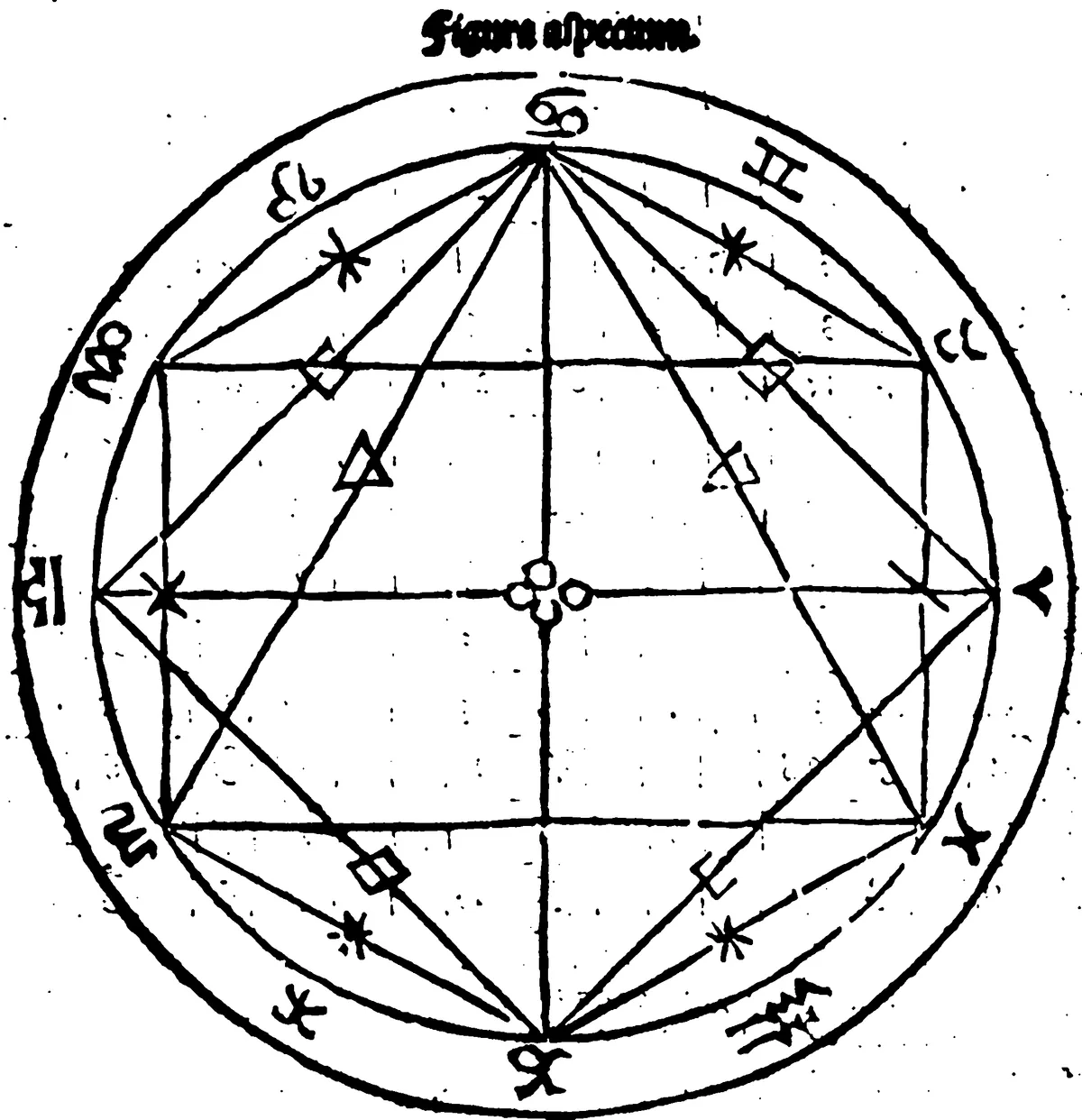
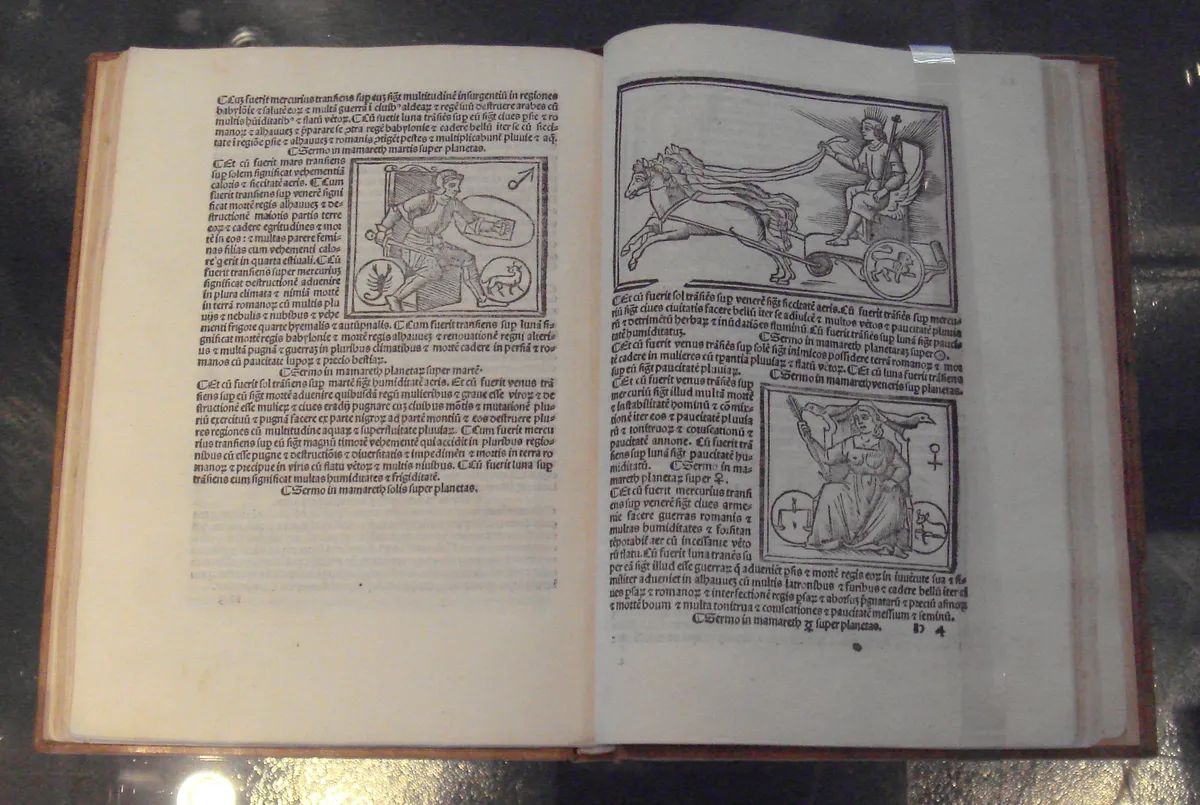
- Printing followed: al-Qabīṣī's Introduction was printed twelve times between 1473 and 1521. On February 7, 1489, Erhard Ratdolt in Augsburg printed Abū Maʿshar's Introductorium in astronomiam, in the translation of Hermann of Carinthia, with woodcuts.


What did people within Islam think of it?
- Astrology was practiced at court and paid for: al-Nawbakht and Māshāʾallāh cast the horoscope for the founding of Baghdad for the caliph al-Manṣūr.
- Christopher Brunner writes that astrology "was constantly practiced in Iran during the Islamic period, though from time to time theologians denounced it as based on a denial of Allāh's omnipotence."
- Among philosophers, opinions differed. Al-Kindī wrote on astrology; al-Fārābī rejected the validity of what we now call astrology.
- Alongside astrology, the Islamic world also knew astral magic, known from works such as the Picatrix (Ghāyat al-ḥakīm); this site does not cover it.
- Astronomy, the calculation of the sky on which the calendar and the prayer times rest, is different from astrology, the interpretation of the sky. The calendar and the moon sighting are on the pages on Arabic astronomy.
- This site describes what people did and thought. It gives no religious advice and makes no judgment on what is permitted.
Arabic astronomy: the star names, the lunar mansions and the Islamic calendar
Where the sources differ
- Al-Bīrūnī's death: the Biographical Encyclopedia of Astronomers gives about 1050; Wright, in the introduction to his translation, gives 1048, in Ghazna.
- Abū Maʿshar's dates are uncertain: the Biographical Encyclopedia of Astronomers gives "possibly 787" and "possibly 886".
- Sahl ibn Bishr is described as Jewish in some sources and as a Syriac Christian in others.
- The Latin On the Rays of the Stars (De radiis) has long been attributed to al-Kindī; since 2023 that attribution has been disputed (Matton, Archives d'histoire doctrinale et littéraire du Moyen Âge).
- Ptolemy, al-Bīrūnī writes, never changed the formula of the Lot of Fortune; others reverse it for night births. The calculator lets you choose.
- For night births, some modern authors put the two nodes in the middle of the firdaria; al-Bīrūnī puts them at the end, "whether day or night".
Sources
- al-Bīrūnī, The Book of Instruction in the Elements of the Art of Astrology, written in Ghazna in 1029, translated by R. Ramsay Wright (London: Luzac, 1934).
- Christopher J. Brunner, 'Astrology and Astronomy in Iran iii. Astrology in Islamic Times', Encyclopaedia Iranica II/8 (1987, updated 2016), pp. 858–871. www.iranicaonline.org
- Ari Belenkiy, 'Māshāʾallāh ibn Atharī', Biographical Encyclopedia of Astronomers (Springer, 2007). islamsci.mcgill.ca
- Keiji Yamamoto, 'Abū Maʿshar', Biographical Encyclopedia of Astronomers (Springer, 2007). islamsci.mcgill.ca
- Keiji Yamamoto, 'Qabīṣī', Biographical Encyclopedia of Astronomers (Springer, 2007). islamsci.mcgill.ca
- Michio Yano, 'Bīrūnī', Biographical Encyclopedia of Astronomers (Springer, 2007). islamsci.mcgill.ca
- Kim Plofker, 'Fazārī', Biographical Encyclopedia of Astronomers (Springer, 2007). islamsci.mcgill.ca
- 'Sahl ibn Bishr', Wikipedia (English). en.wikipedia.org
- Benjamin N. Dykes, Persian Nativities II: ʿUmar al-Ṭabarī and Abū Bakr (Cazimi Press, 2010), publisher's description. bendykes.com
- Benjamin N. Dykes, Dorotheus's Carmen Astrologicum (Cazimi Press, 2017), publisher's description. bendykes.com
- Peter Adamson, 'al-Kindi', Stanford Encyclopedia of Philosophy. plato.stanford.edu
- 'al-Farabi', Stanford Encyclopedia of Philosophy. plato.stanford.edu
- Ptolemaeus Arabus et Latinus, 'Tetrabiblos' (Bavarian Academy of Sciences). ptolemaeus.badw.de
- Margaret Gaida, Encounters with Alcabitius: Reading Arabic Astrology in Premodern Europe (PhD dissertation, University of Oklahoma, 2017). shareok.org
- Glasgow Incunabula Project, Albumasar: Introductorium in astronomiam (Augsburg: Erhard Ratdolt, 1489). www.gla.ac.uk
- Sylvain Matton, 'D'un rayonnement des grammairiens latins ou le De radiis n'est pas d'al-Kindi', Archives d'histoire doctrinale et littéraire du Moyen Âge 89 (2023), pp. 443–456. doi.org
- David Pingree, Picatrix: The Latin Version of the Ghāyat al-ḥakīm (London: Warburg Institute, 1986). openlibrary.org