Other skies
Japanese astronomy
For more than a thousand years, Japan took its astronomy from China: the star map, the lunar mansions, the calendar and the reading of omens in the sky. This page follows that history from the star charts in two tombs near Asuka to the switch to the Gregorian calendar in 1873. Every claim names its source; where the sources disagree, we say so.
Calculator: Sukuyō calculator. Find your birth mansion among the 27 Japanese lunar mansions using the rule of the Sukuyōkyō, and see where the Moon actually was.
Stars in the tombs: Takamatsuzuka and Kitora
Two burial mounds near Asuka, south of Nara, hold the oldest star maps in Japan. According to the official reports, both were built around the end of the seventh or the beginning of the eighth century. On the ceiling of the stone chamber of Takamatsuzuka (高松塚), the stars are small discs of gold leaf joined by red lines into constellations; in the usual reading, the enclosure around the pole is in the middle and the 28 lunar mansions lie around it. The walls show the Blue Dragon, the White Tiger and the Black Tortoise, the animals of three directions; the Vermilion Bird of the south was probably lost when robbers broke in through the south wall in the Kamakura period. The tomb became a Special Historic Site in 1973, and the murals a National Treasure in 1974.
The ceiling of the Kitora tomb is more elaborate. Besides the Sun in gold leaf in the east and the Moon in silver in the west, it has a full star chart with circles for the celestial equator, the ecliptic and the limits of the always-visible and the never-visible sky. The Nara National Research Institute for Cultural Properties calls it the oldest surviving example in the world of a proper Chinese-style star chart; the Japan Heritage portal counts 277 stars. Kitora is also the only tomb in Japan where all four directional animals survive, and below them were figures of the twelve animals of the Chinese cycle: the Agency for Cultural Affairs now confirms nine of them. The murals were taken off the walls for conservation from 2004 and became a National Treasure in 2019.
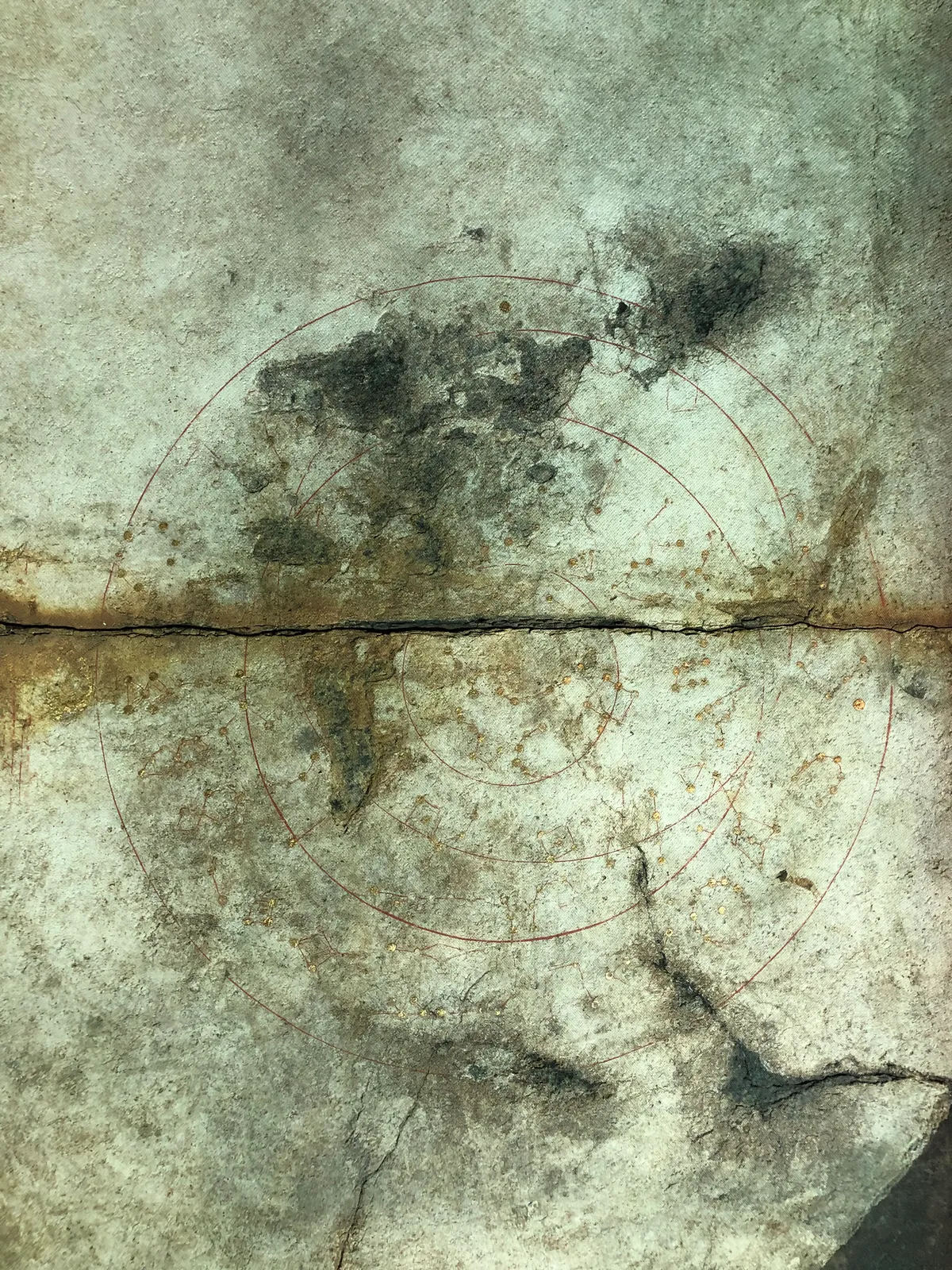

Where and when were these stars observed? In 2015 the Agency for Cultural Affairs and the Nara institute concluded that the chart shows the sky as seen around the fourth century at about 34° north, the latitude of Chang'an and Luoyang in China; Sōma Mitsuru of the National Astronomical Observatory of Japan made the calculation. Nakamura Tsuko, formerly of Teikyo Heisei University, placed it around the first century BC instead. In 2021 a researcher of the Nara institute listed the earlier estimates, 80 BC ± 40 years and AD 300 ± 90 years, and concluded that the chart is not accurate enough to be dated from precession at all.
The Bureau of Yin and Yang
At the Japanese court, astronomy was the work of a government office, the Bureau of Yin and Yang (陰陽寮, Onmyōryō), under the Ministry of the Centre. Later histories date it to the reign of Emperor Tenmu (673–686); the law codes of the early eighth century gave it its fixed form. The codes list its posts: a Doctor of Astronomy (天文博士) who watched the sky, sent a sealed report to the emperor when something unusual appeared (天文密奏) and taught ten students; a Doctor of the Calendar (暦博士) who made the calendar; two Doctors of the Water Clock (漏刻博士) who, with twenty timekeepers, measured the hours and announced them with bells and drums; and six diviners. The calendar for the next year was made in advance, sent to the Ministry on the first day of the eleventh month and presented to the emperor.
The model was Tang China, but the result was different. In China, according to the Heibonsha World Encyclopaedia, astronomy and the calendar belonged to one office of more than a thousand people and divination to another of about ninety; the Japanese bureau combined both, and the author of that entry judges that divination weighed more heavily because Japanese knowledge of astronomy was still limited. From the ninth century the bureau's diviners (onmyōji) took on more and more rituals against misfortune for the emperor and the nobility. When the palace burned in 1127, the great bell of the water clock, in use since the capital moved to Heian-kyō, burned with it, and from then on the bureau declined.
In the tenth century Kamo no Yasunori (賀茂保憲, 917–977) held the posts of Doctor of the Calendar, Doctor of Astronomy and head of the bureau. In the account that most sources follow, he passed the calendar to his son Mitsuyoshi and astronomy to his pupil Abe no Seimei; from then on the Kamo family held the calendar and the Abe family the sky, both by inheritance. Abe no Seimei (安倍晴明), later the hero of countless legends, first appears in the records in 960 as a student of astronomy, became Doctor of Astronomy and died in 1005; the only book that is certainly his is the Senji ryakketsu (占事略決), a manual of divination. The Abe line later took the name Tsuchimikado. In 1683 the Tsuchimikado family received the right to license every diviner in the country, and in 1870 the bureau was abolished.
Calendars from 862 to 1873
According to the National Astronomical Observatory of Japan, calendar dates were first used in Japan in 604. Like China, Japan used lunisolar calendars: months that follow the Moon, with an extra (leap) month about every three years to keep the year in step with the Sun. All of them came from China. The Senmyō calendar (宣明暦), presented by an envoy from the kingdom of Balhae in 859, was adopted in 862. In China, it was replaced after about 71 years, but Japan ended its embassies to China in 894 and kept the Senmyō calendar for some 800 years. When central control weakened in the long period of wars, local calendar makers began to print their own calendars, and because they each did their own calculations, their dates sometimes differed.
The first Japanese reform came from Shibukawa Harumi (渋川春海, born 1639), the eldest son of one of the four families of go players of the shogunate. In 1673, he proposed to replace the Senmyō calendar with the Chinese Shoushi calendar, but the solar eclipse of 1675, which the Shoushi calendar did not predict and the Senmyō calendar did, took place, and the plan stalled. Harumi then improved the Chinese calendar himself: he determined where in its orbit the Sun moves fastest and corrected for the difference in longitude between China and Kyoto. A first decision went to yet another Chinese calendar, but observations in Kyoto settled the matter: on the 29th day of the tenth month of 1684 his calendar received the name Jōkyō (貞享暦), in use from 1685. Harumi became the first official astronomer of the shogunate (天文方, tenmonkata), and from then on, with the exception of the distant Satsuma domain, no region was allowed to make its own calendar.
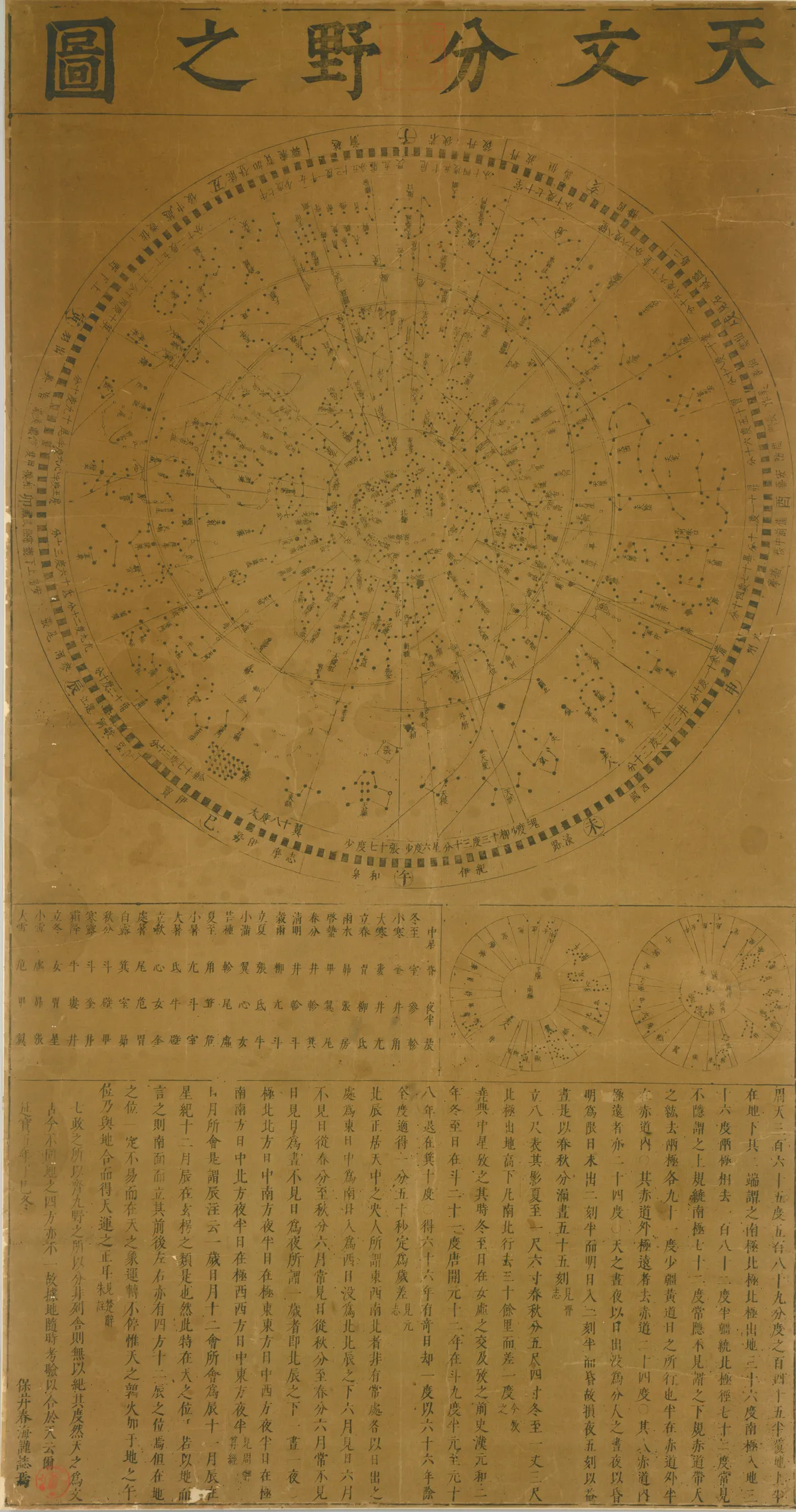

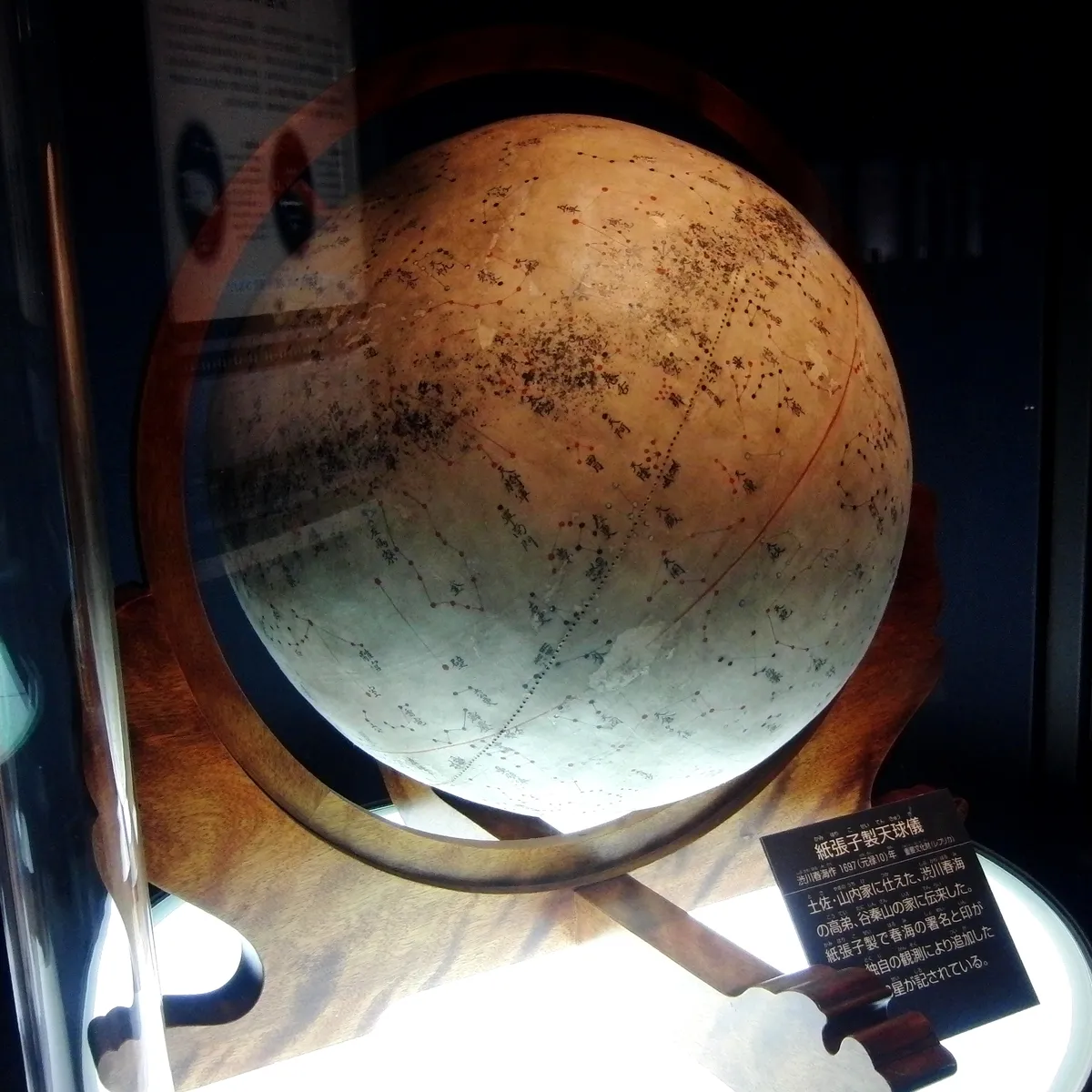

The next reform failed. The Hōreki calendar (宝暦暦) of the Tsuchimikado family, in use from 1755, left out the total solar eclipse of 7 October 1763; a corrected version followed in 1771. The Kansei calendar of 1798 took over Western astronomy, through Chinese books (see Holland in the sky of Edo). The Tenpō calendar (天保暦) of Shibukawa Kagesuke, in use from 1844, was the last and the most precise: it placed the solar terms at the true position of the Sun instead of at equal intervals of time. It ended on the 2nd day of the twelfth month of Meiji 5, 31 December 1872.
The new government had announced the switch on the 9th day of the eleventh month of Meiji 5 (1872): the 3rd day of the twelfth month became 1 January 1873. Besides the drift of the seasons and the superstitions in the almanac notes, the National Astronomical Observatory points to a reason given in the memoirs of Ōkuma Shigenobu: since 1871 the government had paid monthly salaries, and the old year 1873 would have had a leap month, so thirteen salaries. With the new calendar the leap month disappeared, and because the twelfth month of 1872 now had only two days, it was not paid either: two months of salaries saved.
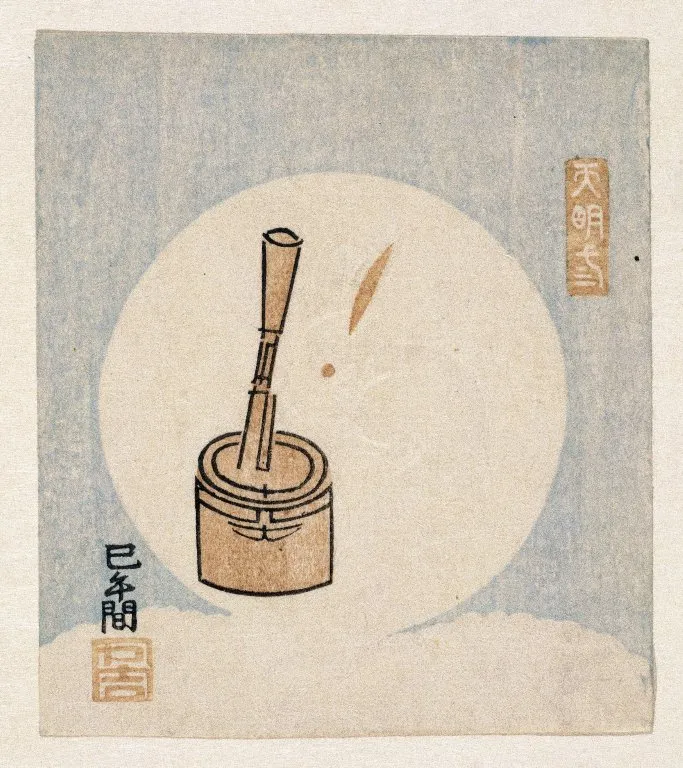

We use the old calendar ourselves: the Sukuyō calculator converts a birth date into the old Japanese calendar. For that, we calculate the new moons and solar terms in Japanese time, and we checked the result against the tables of the National Astronomical Observatory of Japan for 2004 to 2027. Sukuyō calculator
Rokuyō: the six days
Many Japanese calendars still print the rokuyō (六曜), a cycle of six day names: senshō (先勝), tomobiki (友引), senbu (先負), butsumetsu (仏滅), taian (大安) and shakkō (赤口). The rule depends only on the old calendar: the first day of the first and the seventh month is senshō, of the second and the eighth tomobiki, and so on to shakkō for the sixth and the twelfth; after that the names follow each other in order. Put differently: if the number of the month plus the number of the day is divisible by six, the day is taian. A leap month counts as the month before it.
Tradition gives each day a character: taian is lucky for everything, butsumetsu unlucky for everything, and tomobiki, 'pulling a friend along', is avoided for funerals. Where the cycle comes from is uncertain. It is usually traced to a Chinese method of divining the hours, but the dictionaries disagree on when it reached Japan, and they date the present form to somewhere between 1747 and the 1830s. In 1872 the new government banned the lucky and unlucky notes from the almanac; the rokuyō survived in unofficial calendars and became widespread after the Second World War.
Sukuyō, the nine luminaries and Myōken
A second, Buddhist tradition came with the monk Kūkai, who in 806 brought the Sukuyōkyō (宿曜經) back from Tang China. This handbook of astrology, attributed to Amoghavajra (759, revised in 764), works with 27 lunar mansions instead of the 28 of Chinese astronomy. Hōzō (905–969), a monk of the Tōdai-ji, is regarded as the founder of Sukuyōdō, the 'way of the mansions and luminaries'; according to Jeffrey Kotyk, it was the only Japanese tradition that practiced horoscopy. Our Sukuyō calculator finds the birth mansion with the rule of the text.
How to determine a person's birth mansion was the subject of a famous dispute between Hōzō and Kamo no Yasunori. A later collection of esoteric rituals, the Gyōrinshō (行林抄), records it: Hōzō took the mansion in which the Moon stood at the hour of birth, which has to be calculated; Yasunori took the mansion that the almanac assigned to the birthday. The verdict followed Hōzō for the mansion. For their calculations the Buddhist astrologers used the Futian calendar (符天暦), which the monk Nichien had brought from China in 957 at Yasunori's own request.
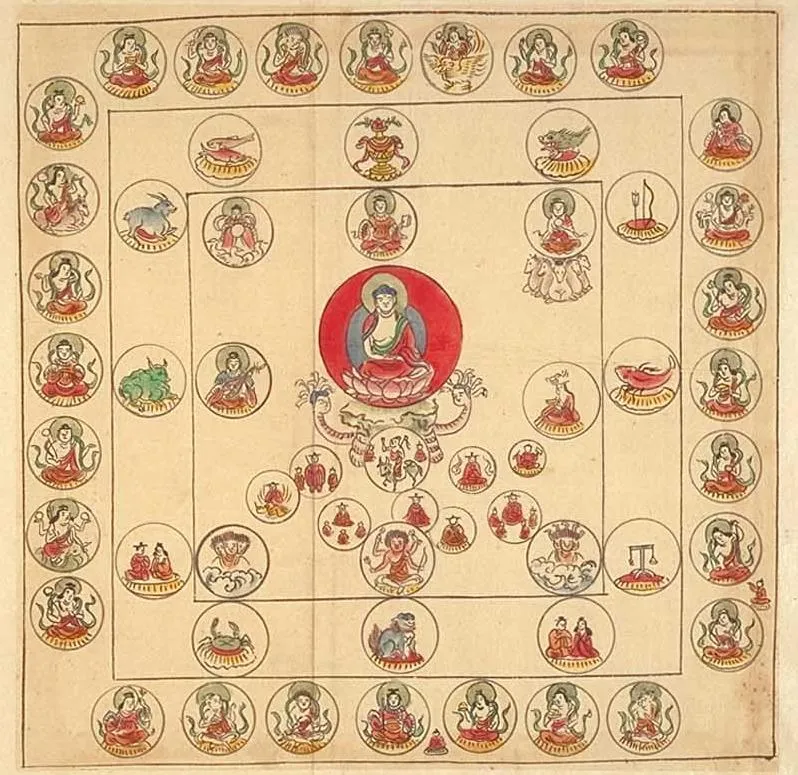
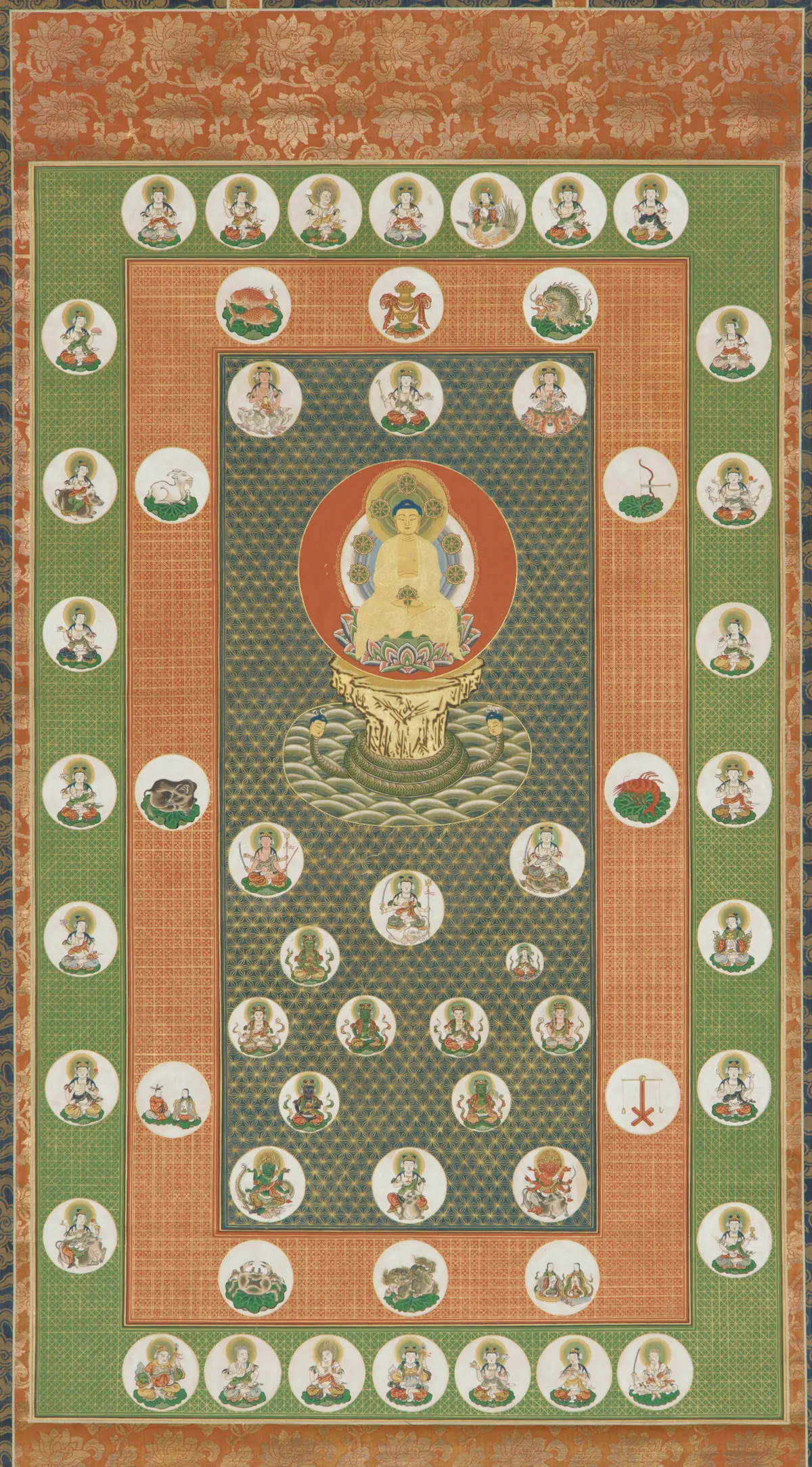
The nine luminaries (九曜, kuyō) are the seven of the week (the Sun, the Moon, Mars, Mercury, Jupiter, Venus and Saturn) plus Rāhu and Ketu, which in Indian astronomy are the two points where the path of the Moon crosses the ecliptic. They came from India and reached Japan through esoteric Buddhism, where diviners matched them to a person's year of birth. Myōken (妙見) is the Pole Star made into a bodhisattva, in practice often merged with the Big Dipper. Warrior clans such as the Chiba worshipped him as a god of war, and the crests of nine and ten stars that they used recall this cult.


The sky in daily life: Subaru and Tanabata
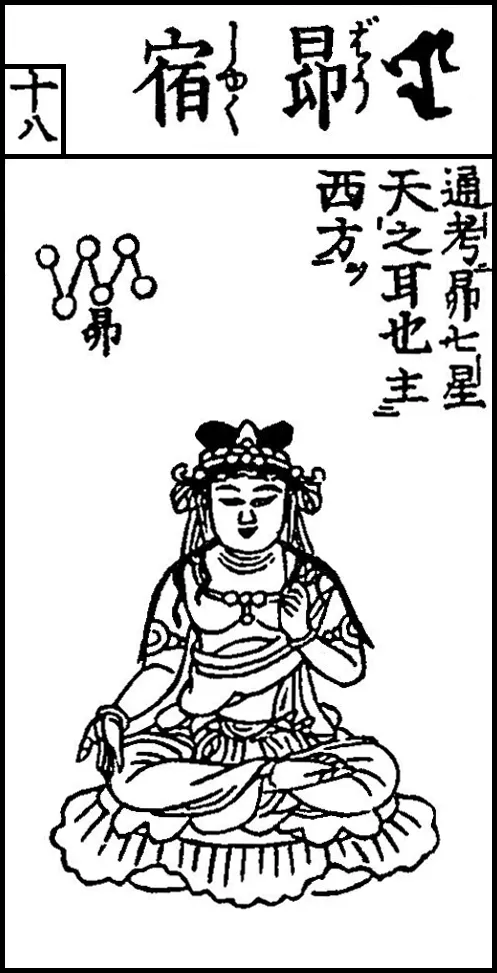
Subaru (昴) is the Japanese name of the Pleiades, the cluster in which the eye usually sees six stars. Edo-period scholars derived the name from the verb subaru, 'to bind together', as if the stars were strung on a thread; similar words for strings of jewels appear in the Kojiki and the Man'yōshū. As the name of a star it is first found in the dictionary Wamyōshō (about 934), which quotes the Sukuyōkyō, and most famously in the Pillow Book of Sei Shōnagon: 'Of stars, Subaru…'
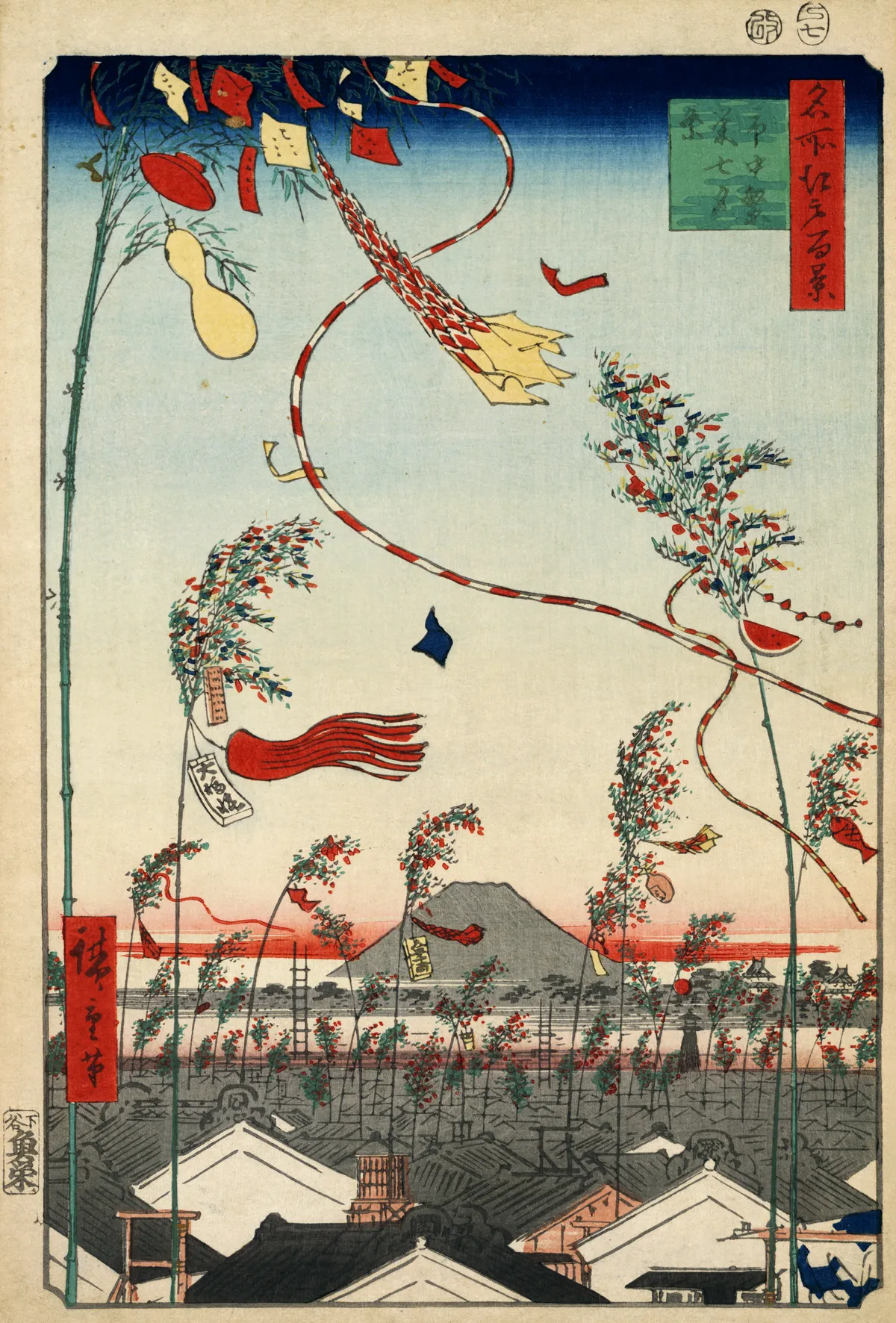
Tanabata (七夕), on the seventh day of the seventh month, comes from the Chinese legend of the Weaver Girl (Vega) and the Cowherd (Altair), who meet once a year across the Milky Way. At the Nara court, it was the festival of the two stars, at which women prayed for skill in their crafts. The Man'yōshū contains more than a hundred Tanabata poems. In the Edo period it spread to ordinary people and became one of the five seasonal festivals.


What we do not know
- When and where the sky of the Kitora chart was observed: around the fourth century in China, around the first century BC, or, as Simon Potter argues, at a latitude on the Korean peninsula. According to the Nara institute, the chart may not be precise enough to decide.
- How many of the twelve animal figures in Kitora survive: the Nara institute's page names six, while the current page of the Agency for Cultural Affairs names nine.
- In which year Hōzō and Kamo no Yasunori disputed the birth mansion: the Gyōrinshō gives no year; Liang (2025) gives 961, other sources 963.
- When Abe no Seimei was born: the year 921 in the dictionaries rests on later genealogies.
- How Kamo no Yasunori divided his knowledge: most sources say the calendar went to his son and astronomy to Abe no Seimei, but one encyclopaedia has astronomy and the calendar going to the son and the art of yin and yang to Seimei.
- Where the rokuyō come from and when they reached Japan.
- How the Japanese text of the Sukuyōkyō, used in the Middle Ages, differs from the Chinese text that we quote: according to Yano Michio the two differ considerably, but we have not been able to read his comparison.
- The month star of Kyūsei (Nine Star Ki): the dictionaries give the rule for the year star, but we found no published rule for the month star. That is why there is no Kyūsei calculator yet.
Sources
- Nara National Research Institute for Cultural Properties, 'What is the Kitora tomb?': the date, the four directional animals, the star chart. nabunken.go.jp
- Agency for Cultural Affairs, public viewing of the Kitora murals: the nine animal figures, the removal of the murals until 2010. bunka.go.jp
- Japan Heritage, 'Kitora Tomb Murals': 277 stars, National Treasure in 2019. japanheritage.jp
- Wakasugi Tomohiro, 'The "mystery" of the date of observation of the Kitora star chart', blog of the Nara institute, July 2021. nabunken.go.jp
- People's Daily Online, Japanese edition, 16 July 2015: the conclusion of 2015, Sōma Mitsuru and Nakamura Tsuko. web.archive.org
- Simon Potter, 'The geographical significance of the tomb inside the Kitora burial mound in Asuka, Nara Prefecture', Nagoya University. nagoya.repo.nii.ac.jp
- Agency for Cultural Affairs and Tokyo National Research Institute for Cultural Properties, report on the conservation of the Takamatsuzuka murals (2025); Japanese Wikipedia, 'Takamatsuzuka kofun': the ceiling and the lost Vermilion Bird. tobunken.repo.nii.ac.jp · ja.wikipedia.org
- Kotobank, 'Onmyōryō' (Heibonsha World Encyclopaedia, Nipponica and other dictionaries): the bureau, its posts, the comparison with Tang China, the fire of 1127. kotobank.jp
- Dai Nihon shi, vol. 281, offices 2: the posts after the Ryō no gige; the division between the Kamo and the Abe. miko.org
- Kotobank, 'Abe no Seimei', 'Kamo no Yasunori' and 'Tsuchimikado family'. kotobank.jp · kotobank.jp · kotobank.jp
- Chenxue Liang, 'The Zokushōsai Ritual: Chinese Origins and Its Development in Japanese Onmyōdō Practices', Religions 16 (2025), 1555: the rituals of the diviners, the Futian calendar of 957, the year 961. doi.org
- National Astronomical Observatory of Japan, Koyomi Wiki, history of the Japanese calendar, parts 1, 2, 3 and 6: from 604 to the Senmyō calendar, Shibukawa Harumi, the Hōreki calendar, the reform of 1872. eco.mtk.nao.ac.jp · eco.mtk.nao.ac.jp · eco.mtk.nao.ac.jp · eco.mtk.nao.ac.jp
- Weblio (Japanese Wikipedia), 'Tenpō calendar'. weblio.jp
- Kotobank, 'Rokuyō' (Nipponica and other dictionaries), and Japanese Wikipedia, 'Rokuyō': the rule, the meanings, the history. kotobank.jp · ja.wikipedia.org
- Jeffrey Kotyk, 'Japanese Buddhist Astrology and Astral Magic: Mikkyō and Sukuyōdō', Japanese Journal of Religious Studies 45/1 (2018), 37–86: Kūkai, horoscopy, the two versions of the text. nirc.nanzan-u.ac.jp
- Gyōrinshō, Taishō vol. 76, no. 2409, p. 458c (SAT): the dispute between Hōzō and Kamo no Yasunori. 21dzk.l.u-tokyo.ac.jp
- Kotobank, 'Kuyō' and 'Myōken'; City of Chiba, 'The Chiba clan and the cult of Myōken'. kotobank.jp · kotobank.jp · city.chiba.jp
- Kotobank, 'Subaru' and 'Tanabata'. kotobank.jp · kotobank.jp
- Kotobank, 'Kyūsei': the rule for the year star. kotobank.jp