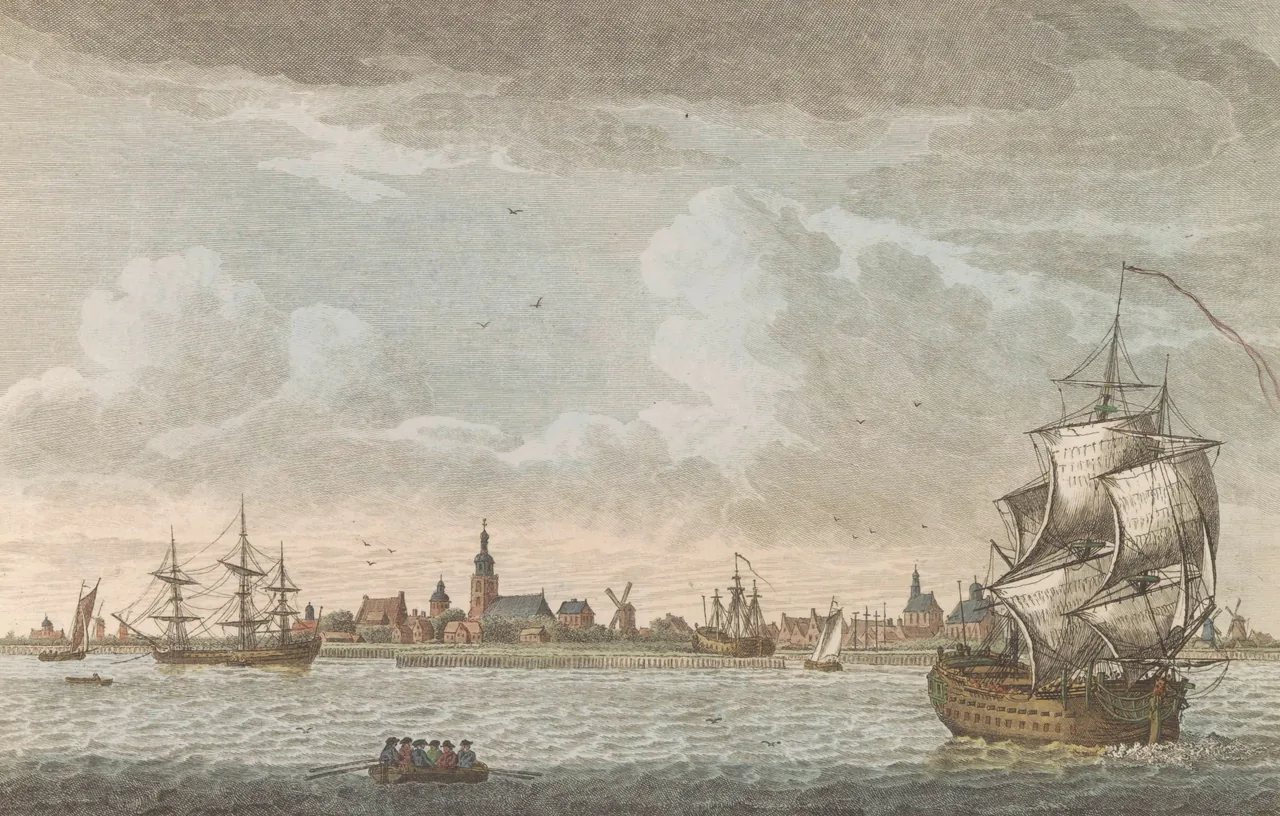
Hoornsche Almanak op het Jaer 2027
The Hoorn Almanac for the year 2027
In the new and the old style, with the daily hours of the rising and setting of the moon, calculated for the town of Hoorn
From 1654 to 1803, Dirck Rembrantsz van Nierop and his heirs calculated the hours of the moon and the tides for Dutch almanacs; from 1709 this was done in Hoorn. This almanac follows the almanac for 1700, which Pieter Rembrantsz van Nierop calculated and which survives complete in the Koninklijke Bibliotheek. Everything has been calculated anew, for Hoorn and for the year 2027.
A coincidence: in 2027, 1 January falls on a Friday, just as it did in 1700. Neither year is a leap year, so the days of the week fall on the same dates all year, and both years have the same dominical letter, C.
Times are given in Dutch time on the 24-hour clock, with daylight saving time in summer. The almanac of 1700 used apparent solar time for Amsterdam.
To explain this almanac
- Dominical letter
- C
- Septuagesima
- 24 January
- Ash Wednesday
- 10 February
- Easter
- 28 March
- Ascension Day
- 6 May
- Pentecost
- 16 May
- First Sunday of Advent
- 28 November
- Easter (old style)
- 2 May
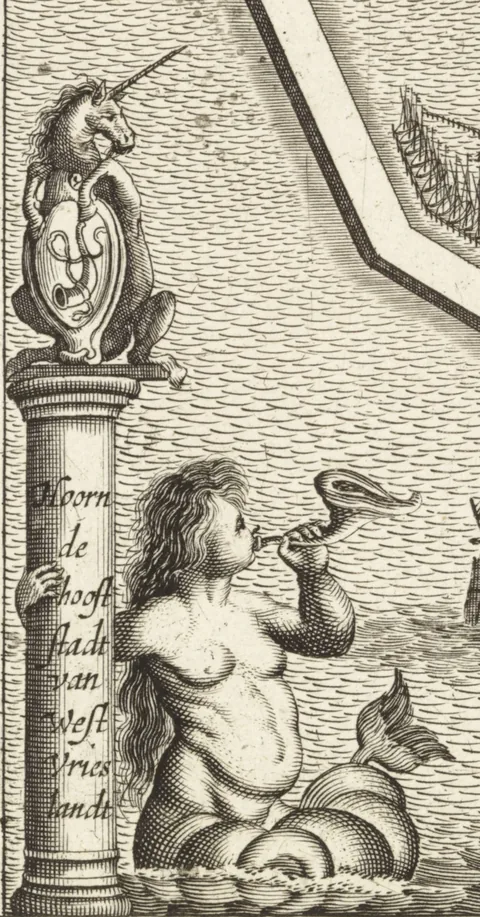
The old style is the calendar of Julius Caesar, the Julian calendar, which in 2027 runs thirteen days behind our calendar. The almanac of 1700 put both styles side by side; some Orthodox churches still follow the old style.
Years since:
- 373 · Van Nierop’s first almanac tables (1654)
- 367 · the Harmonia Macrocosmica of Andreas Cellarius (1660)
Each month has a map of the sky above Hoorn on the 15th, at the first full hour after dark (the sun is then 12° below the horizon). The centre is straight overhead, the edge is the horizon; north at the top, east on the left, as you see the sky lying on your back. Stars down to about magnitude 4.5. The events beside it come from our sky calendar, calculated for Hoorn; times in Dutch time.
The official public holidays of the Netherlands in 2027
- New Year’s Day: Friday 1 January
- Good Friday: Friday 26 March
- Easter Sunday: Sunday 28 March
- Easter Monday: Monday 29 March
- King’s Day: Tuesday 27 April
- Liberation Day: Wednesday 5 May
- Ascension Day: Thursday 6 May
- Whit Sunday: Sunday 16 May
- Whit Monday: Monday 17 May
- Christmas Day: Saturday 25 December
- Boxing Day: Sunday 26 December
Source: the Dutch government. The General Time Limits Act (Algemene termijnenwet, article 3) lists the generally recognised public holidays.
The eclipses and the four seasons
- 6 February: an annular solar eclipse, not visible in Hoorn.
- 21 February: a penumbral eclipse of the moon, with mid-eclipse at 00.12. The moon is then above Hoorn, but in a penumbral eclipse it darkens only a little.
- 18 July: a penumbral eclipse of the moon, not visible in Hoorn (the moon is then below the horizon).
- 2 August: a total solar eclipse. In Hoorn it is partly visible; at 11.05, 37 percent of the sun is covered.
- 17 August: a penumbral eclipse of the moon, not visible in Hoorn (the moon is then below the horizon).
- Spring begins on 20 March at 21.24.
- Summer begins on 21 June at 16.10.
- Autumn begins on 23 September at 08.01.
- Winter begins on 22 December at 03.42.
The sign of the moon at 12:00, as the almanac of 1700 gave it. It is the astrological sign of the zodiac, not the constellation the moon actually stands in front of in the sky; the two are now almost a whole sign apart. A dash means the event does not happen that day: the moon rises and sets about 50 minutes later each day, and so now and then skips a day.
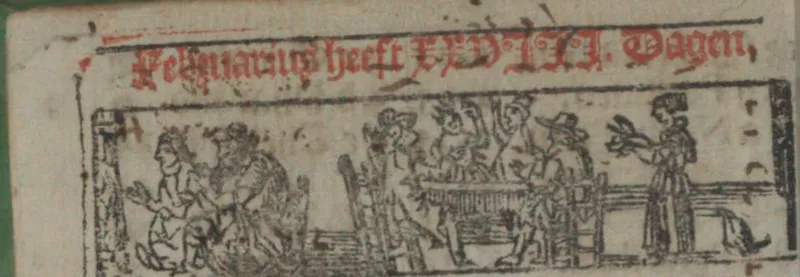
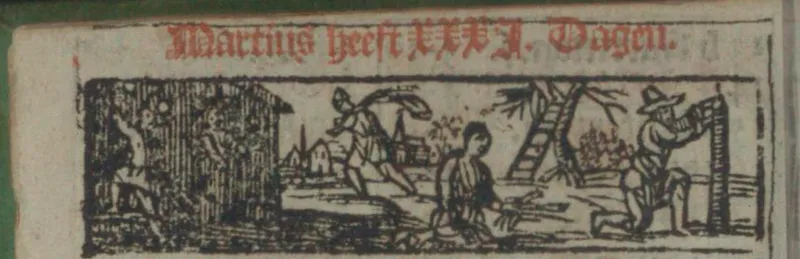
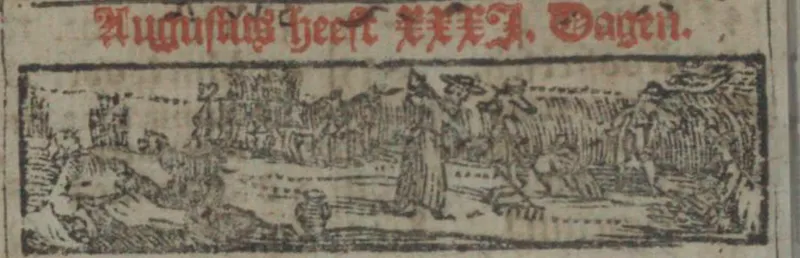
Each month has its old Dutch name, with what the dictionaries say about it (Etymologiebank). The almanac of 1700 itself used the Latin names, as the woodcuts show: January, Februarius, Augustus.
Each month has a small box from the same calculation as our Chinese almanac. A Chinese month begins on the day of the new moon in Beijing time (UTC+8), the time of the Chinese calendar; that date is given. The solar terms are in Dutch time; in Beijing it may already be the next day. In parentheses is the name as Olfert Dapper printed it in Dutch in 1670, in his book on the Dutch East India Company’s embassy to China (p. 499).
January hath XXXI days.
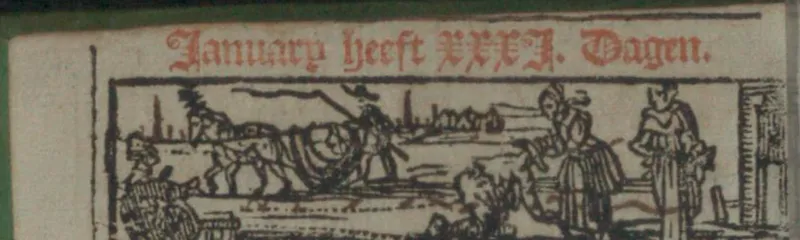
This is what the almanac for 1700 said at the full moon of 5 January: ‘Kout weer. Bucking goet.’ (Cold weather. Bloater good.) A bloater is a smoked herring. We do not give weather forecasts.
In the sky above Hoorn
- 3 January, 18.56: Venus at greatest western elongation
- 4 January, 04.53: Meteor shower: Quadrantids
- 22 January, 13.17: Supermoon
Planets visible this month
- Venus: in the morning low in the southeast
- Mars: in the morning in the southwest
- Jupiter: in the morning in the west
- Saturn: in the evening in the southwest
These are the positions around the 15th, seen from Hoorn: in the evening at the time shown on the star map (or an hour and a quarter after sunset), and in the morning an hour and a quarter before sunrise.
Find it on the map
Taurus: look for the orange-red star Aldebaran in a V of stars; a little farther on lies the Pleiades, a small cloud of stars. On 15 January at 19.00 it stands in the southeast.
Phases of the moon: new moon 7 January, first quarter 15 January, full moon 22 January, last quarter 29 January.
In former times
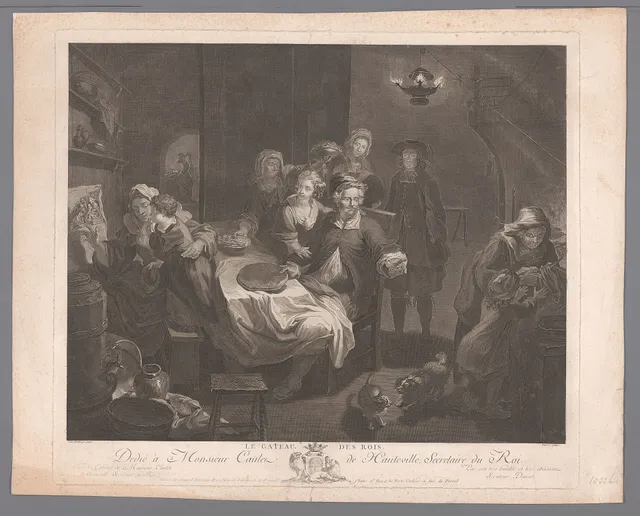
- Epiphany, all over Holland: whoever found the bean in the king’s bread was king for the evening (ter Gouw). (ter Gouw, De volksvermaken (1871), p. 175)
- Koppermaandag, the Monday after Epiphany (in 2027 Monday, 11 January), was in 1871 above all the feast of the printers and typesetters: they offered a sample of their craft as a New Year’s gift, the kopperwens. According to ter Gouw it used to be a feast ‘for everyone’; kopperen meant feasting, drinking and merrymaking. (ter Gouw, De volksvermaken (1871), p. 120–125)


| day | old style | sunrise | sunset | moonrise | moonset | moon in the south | moon in the sign |
|---|---|---|---|---|---|---|---|
| Fri 1 aNew Year’s Day | 19 Dec | 08.51 | 16.35 | 02.43 | 12.12 | 07.34 | Scorpio |
| Sat 2 b | 20 | 08.51 | 16.36 | 04.01 | 12.29 | 08.20 | Scorpio |
| Sun 3 c | 21 | 08.50 | 16.37 | 05.17 | 12.50 | 09.07 | Scorpio |
| Mon 4 d | 22 | 08.50 | 16.38 | 06.29 | 13.20 | 09.57 | Sagittarius |
| Tue 5 e | 23 | 08.50 | 16.40 | 07.33 | 14.01 | 10.48 | Sagittarius |
| Wed 6 f | 24 | 08.49 | 16.41 | 08.25 | 14.55 | 11.39 | Capricorn |
| Thu 7 gChristmas (old style) | 25 | 08.49 | 16.42 | 09.05 | 16.00 | 12.30 | Capricorn |
| New moon Thursday 7 January, at 21.25. | |||||||
| Fri 8 a | 26 | 08.48 | 16.44 | 09.33 | 17.11 | 13.18 | Capricorn |
| Sat 9 b | 27 | 08.48 | 16.45 | 09.53 | 18.25 | 14.04 | Aquarius |
| Sun 10 c | 28 | 08.47 | 16.46 | 10.09 | 19.39 | 14.48 | Aquarius |
| Mon 11 d | 29 | 08.47 | 16.48 | 10.21 | 20.53 | 15.30 | Pisces |
| Tue 12 e | 30 | 08.46 | 16.49 | 10.31 | 22.06 | 16.11 | Pisces |
| Wed 13 f | 31 | 08.45 | 16.51 | 10.41 | 23.20 | 16.52 | Pisces |
| Thu 14 gNew Year (old style) | 1 Jan | 08.44 | 16.53 | 10.52 | — | 17.35 | Aries |
| Fri 15 a | 2 | 08.43 | 16.54 | 11.03 | 00.37 | 18.20 | Aries |
| First quarter Friday 15 January, at 21.35. | |||||||
| Sat 16 b | 3 | 08.43 | 16.56 | 11.18 | 01.57 | 19.09 | Taurus |
| Sun 17 c | 4 | 08.42 | 16.57 | 11.39 | 03.23 | 20.04 | Taurus |
| Mon 18 d | 5 | 08.41 | 16.59 | 12.09 | 04.50 | 21.04 | Gemini |
| Tue 19 e | 6 | 08.40 | 17.01 | 12.55 | 06.14 | 22.09 | Gemini |
| Wed 20 f | 7 | 08.38 | 17.02 | 14.02 | 07.24 | 23.15 | Cancer |
| The sun enters Aquarius on 20 January at 08.30. | |||||||
| Thu 21 g | 8 | 08.37 | 17.04 | 15.29 | 08.15 | — | Cancer |
| Fri 22 a | 9 | 08.36 | 17.06 | 17.06 | 08.49 | 00.20 | Leo |
| Full moon Friday 22 January, at 13.17. | |||||||
| Sat 23 b | 10 | 08.35 | 17.08 | 18.42 | 09.12 | 01.21 | Leo |
| Sun 24 c | 11 | 08.34 | 17.10 | 20.14 | 09.28 | 02.17 | Virgo |
| Mon 25 d | 12 | 08.32 | 17.11 | 21.41 | 09.42 | 03.08 | Virgo |
| Tue 26 e | 13 | 08.31 | 17.13 | 23.04 | 09.54 | 03.56 | Virgo |
| Wed 27 f | 14 | 08.29 | 17.15 | — | 10.05 | 04.43 | Libra |
| Thu 28 g | 15 | 08.28 | 17.17 | 00.26 | 10.18 | 05.29 | Libra |
| Fri 29 a | 16 | 08.26 | 17.19 | 01.46 | 10.34 | 06.15 | Scorpio |
| Last quarter Friday 29 January, at 11.56. | |||||||
| Sat 30 b | 17 | 08.25 | 17.21 | 03.04 | 10.54 | 07.03 | Scorpio |
| Sun 31 c | 18 | 08.23 | 17.23 | 04.19 | 11.20 | 07.53 | Sagittarius |
February hath XXVIII days.
In the sky above Hoorn
- 21 February: penumbral lunar eclipse, mid-eclipse at 00.12.
- 3 February, 07.20: Mercury at greatest eastern elongation
- 11 February, 01.17: Jupiter at opposition
- 19 February, 16.44: Mars at opposition
- 21 February, 00.24: Supermoon
Planets visible this month
- Mars: all night; in the evening in the east
- Jupiter: all night; in the evening in the east
- Saturn: in the evening in the west
These are the positions around the 15th, seen from Hoorn: in the evening at the time shown on the star map (or an hour and a quarter after sunset), and in the morning an hour and a quarter before sunrise.
Find it on the map
Orion: three stars in a row form the belt; above it is the red Betelgeuse, below it the blue-white Rigel. On 15 February at 20.00 it stands in the south.
Phases of the moon: new moon 6 February, first quarter 14 February, full moon 21 February, last quarter 28 February.
In former times
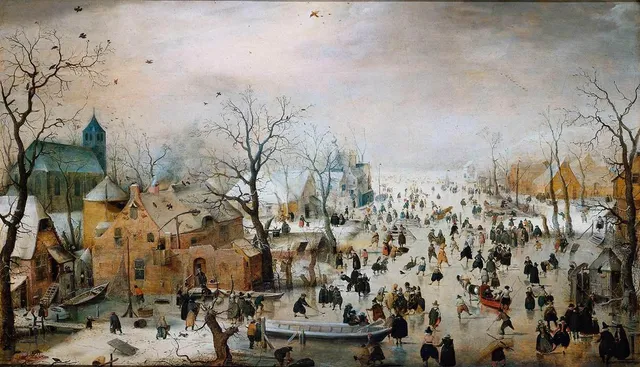
- Wherever there were lakes and canals, young and old went skating; in hard frost the IJ, the Amstel and the Maas held a ‘fair on the ice’ (ter Gouw). (ter Gouw, De volksvermaken (1871), p. 81–82)

| day | old style | sunrise | sunset | moonrise | moonset | moon in the south | moon in the sign |
|---|---|---|---|---|---|---|---|
| Mon 1 d | 19 Jan | 08.22 | 17.24 | 05.26 | 11.58 | 08.43 | Sagittarius |
| Tue 2 e | 20 | 08.20 | 17.26 | 06.23 | 12.47 | 09.35 | Sagittarius |
| Wed 3 f | 21 | 08.19 | 17.28 | 07.06 | 13.49 | 10.25 | Capricorn |
| Thu 4 g | 22 | 08.17 | 17.30 | 07.37 | 14.59 | 11.14 | Capricorn |
| Fri 5 a | 23 | 08.15 | 17.32 | 08.00 | 16.13 | 12.01 | Aquarius |
| Sat 6 b | 24 | 08.13 | 17.34 | 08.16 | 17.27 | 12.46 | Aquarius |
| New moon Saturday 6 February, at 16.56. | |||||||
| 6 February: an annular solar eclipse, not visible in Hoorn. | |||||||
| Sun 7 c | 25 | 08.12 | 17.36 | 08.29 | 18.42 | 13.29 | Aquarius |
| Mon 8 d | 26 | 08.10 | 17.38 | 08.41 | 19.56 | 14.11 | Pisces |
| Tue 9 e | 27 | 08.08 | 17.40 | 08.51 | 21.10 | 14.52 | Pisces |
| Wed 10 f | 28 | 08.06 | 17.42 | 09.01 | 22.26 | 15.34 | Aries |
| Thu 11 g | 29 | 08.04 | 17.44 | 09.12 | 23.44 | 16.18 | Aries |
| Fri 12 a | 30 | 08.02 | 17.45 | 09.25 | — | 17.05 | Taurus |
| Sat 13 b | 31 | 08.00 | 17.47 | 09.43 | 01.06 | 17.56 | Taurus |
| Sun 14 c | 1 Feb | 07.58 | 17.49 | 10.08 | 02.31 | 18.52 | Taurus |
| First quarter Sunday 14 February, at 08.59. | |||||||
| Mon 15 d | 2 | 07.56 | 17.51 | 10.45 | 03.54 | 19.53 | Gemini |
| Tue 16 e | 3 | 07.54 | 17.53 | 11.41 | 05.08 | 20.56 | Gemini |
| Wed 17 f | 4 | 07.52 | 17.55 | 12.57 | 06.06 | 22.00 | Cancer |
| Thu 18 g | 5 | 07.50 | 17.57 | 14.27 | 06.45 | 23.02 | Cancer |
| The sun enters Pisces on 18 February at 22.33. | |||||||
| Fri 19 a | 6 | 07.48 | 17.59 | 16.02 | 07.12 | 23.59 | Leo |
| Sat 20 b | 7 | 07.46 | 18.01 | 17.36 | 07.32 | — | Leo |
| Sun 21 c | 8 | 07.44 | 18.03 | 19.07 | 07.46 | 00.52 | Virgo |
| Full moon Sunday 21 February, at 00.24. | |||||||
| 21 February: a penumbral eclipse of the moon, with mid-eclipse at 00.12. The moon is then above Hoorn, but in a penumbral eclipse it darkens only a little. | |||||||
| Mon 22 d | 9 | 07.42 | 18.04 | 20.33 | 07.59 | 01.43 | Virgo |
| Tue 23 e | 10 | 07.40 | 18.06 | 21.58 | 08.11 | 02.31 | Libra |
| Wed 24 f | 11 | 07.38 | 18.08 | 23.21 | 08.24 | 03.18 | Libra |
| Thu 25 g | 12 | 07.35 | 18.10 | — | 08.38 | 04.06 | Scorpio |
| Fri 26 a | 13 | 07.33 | 18.12 | 00.43 | 08.57 | 04.55 | Scorpio |
| Sat 27 b | 14 | 07.31 | 18.14 | 02.02 | 09.21 | 05.45 | Sagittarius |
| Sun 28 c | 15 | 07.29 | 18.16 | 03.14 | 09.55 | 06.36 | Sagittarius |
| Last quarter Sunday 28 February, at 06.17. | |||||||
March hath XXXI days.
In the sky above Hoorn
- 17 March, 07.56: Mercury at greatest western elongation
Planets visible this month
- Mars: all night; in the evening in the southeast
- Jupiter: in the evening in the southeast
These are the positions around the 15th, seen from Hoorn: in the evening at the time shown on the star map (or an hour and a quarter after sunset), and in the morning an hour and a quarter before sunrise.
Find it on the map
Gemini: two bright stars close together, Castor and Pollux. On 15 March at 20.00 it stands high in the southeast.
Phases of the moon: new moon 8 March, first quarter 15 March, full moon 22 March, last quarter 30 March.
In former times
- Hoorn had an early annual market on the day before Palm Sunday; in 2027 that would be Saturday, 20 March (Velius). (Velius, Chronyk van Hoorn (1740), p. 64)
- By the end of the 14th century Hoorn already had two annual fairs, around Palm Sunday and before Pentecost. In 1629 the Palm fair was set at one week. (Kermis Hoorn, history)
| day | old style | sunrise | sunset | moonrise | moonset | moon in the south | moon in the sign |
|---|---|---|---|---|---|---|---|
| Mon 1 d | 16 Feb | 07.27 | 18.18 | 04.15 | 10.40 | 07.28 | Sagittarius |
| Tue 2 e | 17 | 07.24 | 18.19 | 05.04 | 11.38 | 08.19 | Capricorn |
| Wed 3 f | 18 | 07.22 | 18.21 | 05.39 | 12.45 | 09.09 | Capricorn |
| Thu 4 g | 19 | 07.20 | 18.23 | 06.04 | 13.58 | 09.57 | Capricorn |
| Fri 5 a | 20 | 07.18 | 18.25 | 06.23 | 15.12 | 10.42 | Aquarius |
| Sat 6 b | 21 | 07.15 | 18.27 | 06.37 | 16.27 | 11.26 | Aquarius |
| Sun 7 c | 22 | 07.13 | 18.29 | 06.49 | 17.42 | 12.09 | Pisces |
| Mon 8 d | 23 | 07.11 | 18.30 | 07.00 | 18.57 | 12.50 | Pisces |
| New moon Monday 8 March, at 10.30. | |||||||
| Tue 9 e | 24 | 07.08 | 18.32 | 07.10 | 20.13 | 13.33 | Aries |
| Wed 10 f | 25 | 07.06 | 18.34 | 07.21 | 21.32 | 14.17 | Aries |
| Thu 11 g | 26 | 07.04 | 18.36 | 07.34 | 22.53 | 15.03 | Aries |
| Fri 12 a | 27 | 07.01 | 18.38 | 07.50 | — | 15.53 | Taurus |
| Sat 13 b | 28 | 06.59 | 18.39 | 08.13 | 00.18 | 16.48 | Taurus |
| Sun 14 c | 1 Mar | 06.57 | 18.41 | 08.45 | 01.41 | 17.46 | Gemini |
| Mon 15 d | 2 | 06.54 | 18.43 | 09.33 | 02.58 | 18.47 | Gemini |
| First quarter Monday 15 March, at 17.25. | |||||||
| Tue 16 e | 3 | 06.52 | 18.45 | 10.40 | 03.59 | 19.49 | Cancer |
| Wed 17 f | 4 | 06.50 | 18.47 | 12.03 | 04.44 | 20.49 | Cancer |
| Thu 18 g | 5 | 06.47 | 18.48 | 13.34 | 05.14 | 21.46 | Leo |
| Fri 19 a | 6 | 06.45 | 18.50 | 15.06 | 05.35 | 22.40 | Leo |
| Sat 20 b | 7 | 06.43 | 18.52 | 16.35 | 05.52 | 23.30 | Virgo |
| The sun enters Aries on 20 March at 21.24. | |||||||
| Sun 21 c | 8 | 06.40 | 18.54 | 18.02 | 06.05 | — | Virgo |
| Mon 22 d | 9 | 06.38 | 18.56 | 19.27 | 06.17 | 00.19 | Libra |
| Full moon Monday 22 March, at 11.44. | |||||||
| Tue 23 e | 10 | 06.36 | 18.57 | 20.52 | 06.30 | 01.06 | Libra |
| Wed 24 f | 11 | 06.33 | 18.59 | 22.15 | 06.43 | 01.54 | Libra |
| Thu 25 g | 12 | 06.31 | 19.01 | 23.37 | 07.00 | 02.44 | Scorpio |
| Fri 26 aGood Friday | 13 | 06.28 | 19.03 | — | 07.22 | 03.34 | Scorpio |
| Sat 27 b | 14 | 06.26 | 19.04 | 00.54 | 07.52 | 04.26 | Sagittarius |
| Sun 28 cEaster Sunday | 15 | 07.24 | 20.06 | 03.02 | 09.33 | 06.18 | Sagittarius |
| Mon 29 dEaster Monday | 16 | 07.21 | 20.08 | 03.56 | 10.26 | 07.11 | Capricorn |
| Tue 30 e | 17 | 07.19 | 20.10 | 04.37 | 11.31 | 08.01 | Capricorn |
| Last quarter Tuesday 30 March, at 02.54. | |||||||
| Wed 31 f | 18 | 07.17 | 20.11 | 05.06 | 12.41 | 08.50 | Capricorn |
April hath XXX days.
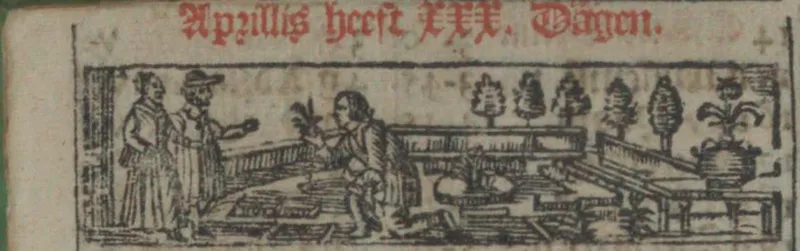
In the sky above Hoorn
No notable event in our sky calendar; the map shows what there is to see.
Planets visible this month
- Mars: in the evening high in the southwest
- Jupiter: in the evening high in the southwest
These are the positions around the 15th, seen from Hoorn: in the evening at the time shown on the star map (or an hour and a quarter after sunset), and in the morning an hour and a quarter before sunrise.
Find it on the map
Leo: a backward question mark of stars, the Sickle, with the bright Regulus at the bottom. On 15 April at 23.00 it stands high in the south.
Phases of the moon: new moon 7 April, first quarter 14 April, full moon 21 April, last quarter 28 April.
| day | old style | sunrise | sunset | moonrise | moonset | moon in the south | moon in the sign |
|---|---|---|---|---|---|---|---|
| Thu 1 g | 19 Mar | 07.14 | 20.13 | 05.27 | 13.55 | 09.36 | Aquarius |
| Fri 2 a | 20 | 07.12 | 20.15 | 05.43 | 15.10 | 10.21 | Aquarius |
| Sat 3 b | 21 | 07.10 | 20.17 | 05.56 | 16.24 | 11.03 | Pisces |
| Sun 4 c | 22 | 07.07 | 20.18 | 06.07 | 17.39 | 11.45 | Pisces |
| Mon 5 d | 23 | 07.05 | 20.20 | 06.18 | 18.55 | 12.28 | Pisces |
| Tue 6 e | 24 | 07.03 | 20.22 | 06.29 | 20.13 | 13.12 | Aries |
| Wed 7 f | 25 | 07.00 | 20.24 | 06.41 | 21.35 | 13.58 | Aries |
| New moon Wednesday 7 April, at 01.51. | |||||||
| Thu 8 g | 26 | 06.58 | 20.25 | 06.57 | 23.00 | 14.48 | Taurus |
| Fri 9 a | 27 | 06.56 | 20.27 | 07.18 | — | 15.42 | Taurus |
| Sat 10 b | 28 | 06.53 | 20.29 | 07.48 | 00.26 | 16.40 | Gemini |
| Sun 11 c | 29 | 06.51 | 20.31 | 08.31 | 01.47 | 17.41 | Gemini |
| Mon 12 d | 30 | 06.49 | 20.33 | 09.33 | 02.54 | 18.43 | Cancer |
| Tue 13 e | 31 | 06.47 | 20.34 | 10.51 | 03.43 | 19.44 | Cancer |
| Wed 14 f | 1 Apr | 06.44 | 20.36 | 12.19 | 04.17 | 20.41 | Leo |
| First quarter Wednesday 14 April, at 00.57. | |||||||
| Thu 15 g | 2 | 06.42 | 20.38 | 13.48 | 04.40 | 21.34 | Leo |
| Fri 16 a | 3 | 06.40 | 20.40 | 15.15 | 04.58 | 22.24 | Leo |
| Sat 17 b | 4 | 06.38 | 20.41 | 16.40 | 05.12 | 23.11 | Virgo |
| Sun 18 c | 5 | 06.35 | 20.43 | 18.04 | 05.24 | 23.58 | Virgo |
| Mon 19 d | 6 | 06.33 | 20.45 | 19.27 | 05.36 | — | Libra |
| Tue 20 e | 7 | 06.31 | 20.47 | 20.50 | 05.49 | 00.45 | Libra |
| The sun enters Taurus on 20 April at 09.17. | |||||||
| Wed 21 f | 8 | 06.29 | 20.48 | 22.12 | 06.05 | 01.33 | Scorpio |
| Full moon Wednesday 21 April, at 00.27. | |||||||
| Thu 22 g | 9 | 06.27 | 20.50 | 23.32 | 06.25 | 02.23 | Scorpio |
| Fri 23 a | 10 | 06.25 | 20.52 | — | 06.51 | 03.15 | Sagittarius |
| Sat 24 b | 11 | 06.22 | 20.54 | 00.44 | 07.28 | 04.08 | Sagittarius |
| Sun 25 c | 12 | 06.20 | 20.55 | 01.45 | 08.17 | 05.01 | Sagittarius |
| Mon 26 d | 13 | 06.18 | 20.57 | 02.32 | 09.17 | 05.53 | Capricorn |
| Tue 27 eKing’s Day | 14 | 06.16 | 20.59 | 03.05 | 10.26 | 06.42 | Capricorn |
| Wed 28 f | 15 | 06.14 | 21.01 | 03.30 | 11.38 | 07.30 | Aquarius |
| Last quarter Wednesday 28 April, at 22.18. | |||||||
| Thu 29 g | 16 | 06.12 | 21.02 | 03.48 | 12.52 | 08.14 | Aquarius |
| Fri 30 a | 17 | 06.10 | 21.04 | 04.02 | 14.05 | 08.57 | Aquarius |
May hath XXXI days.
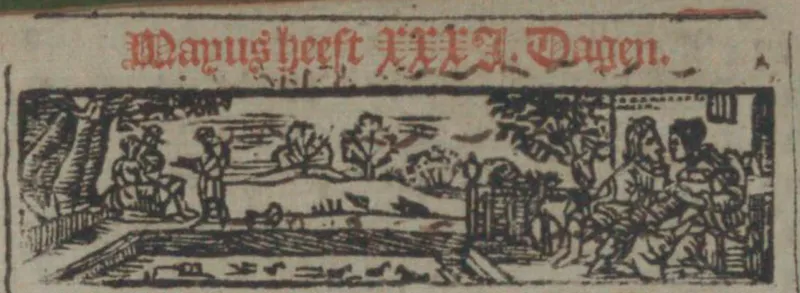
In the sky above Hoorn
- 7 May, 20.40: Conjunction of Venus and Saturn
- 28 May, 12.01: Mercury at greatest eastern elongation
Planets visible this month
- Mars: in the evening in the west
- Jupiter: in the evening in the west
These are the positions around the 15th, seen from Hoorn: in the evening at the time shown on the star map (or an hour and a quarter after sunset), and in the morning an hour and a quarter before sunrise.
Find it on the map
Arcturus: follow the curve of the handle of the Big Dipper in the Great Bear until you reach a bright orange star. On 16 May at 00.00 it stands high in the south.
Phases of the moon: new moon 6 May, first quarter 13 May, full moon 20 May, last quarter 28 May.
In former times
- Hoorn’s second old annual fair was held on the eve of Pentecost; it already existed at the end of the 14th century. According to Centen it still existed in 1572 and then slowly fell out of use (Velius, note 89). (Velius, Chronyk van Hoorn (1740), p. 64)
- The history page of Kermis Hoorn tells a different story from Centen: in 1629 the Pentecost fair lasted only one day, it was held for the last time in 1665, and in 1666 the burgomaster abolished it. So the sources differ on when it ended. (Kermis Hoorn, history)
- On Ascension Day people in Holland went out at daybreak: ‘hemelvaren’; in Overijssel this was called dauwtreden, dew treading. Around 1830, according to ter Gouw, it was still in full swing. People in Holland also said dauwtrappen, but for any early outing, not only on Ascension Day. (ter Gouw, De volksvermaken (1871), p. 219–220)
- Luilak, the Saturday before Pentecost (in 2027 Saturday, 15 May): whoever slept longest was the luilak, the lazybones, and the boys woke the neighborhood with noise before dawn. In 1871 ‘almost the whole country’ knew the feast. (ter Gouw, De volksvermaken (1871), p. 221–223)
| day | old style | sunrise | sunset | moonrise | moonset | moon in the south | moon in the sign |
|---|---|---|---|---|---|---|---|
| Sat 1 b | 18 Apr | 06.08 | 21.06 | 04.14 | 15.19 | 09.39 | Pisces |
| Sun 2 cEaster (old style) | 19 | 06.06 | 21.07 | 04.24 | 16.33 | 10.21 | Pisces |
| Mon 3 d | 20 | 06.04 | 21.09 | 04.35 | 17.50 | 11.04 | Aries |
| Tue 4 e | 21 | 06.02 | 21.11 | 04.47 | 19.11 | 11.49 | Aries |
| Wed 5 fLiberation Day | 22 | 06.01 | 21.13 | 05.02 | 20.35 | 12.38 | Taurus |
| Thu 6 gAscension Day | 23 | 05.59 | 21.14 | 05.21 | 22.03 | 13.31 | Taurus |
| New moon Thursday 6 May, at 12.59. | |||||||
| Fri 7 a | 24 | 05.57 | 21.16 | 05.47 | 23.28 | 14.29 | Taurus |
| Sat 8 b | 25 | 05.55 | 21.18 | 06.27 | — | 15.31 | Gemini |
| Sun 9 c | 26 | 05.53 | 21.19 | 07.24 | 00.42 | 16.35 | Gemini |
| Mon 10 d | 27 | 05.51 | 21.21 | 08.39 | 01.39 | 17.37 | Cancer |
| Tue 11 e | 28 | 05.50 | 21.23 | 10.06 | 02.18 | 18.36 | Cancer |
| Wed 12 f | 29 | 05.48 | 21.24 | 11.35 | 02.45 | 19.31 | Leo |
| Thu 13 g | 30 | 05.46 | 21.26 | 13.03 | 03.04 | 20.21 | Leo |
| First quarter Thursday 13 May, at 06.44. | |||||||
| Fri 14 a | 1 May | 05.45 | 21.27 | 14.28 | 03.19 | 21.09 | Virgo |
| Sat 15 b | 2 | 05.43 | 21.29 | 15.50 | 03.32 | 21.55 | Virgo |
| Sun 16 cWhit Sunday | 3 | 05.42 | 21.31 | 17.11 | 03.44 | 22.41 | Libra |
| Mon 17 dWhit Monday | 4 | 05.40 | 21.32 | 18.32 | 03.56 | 23.28 | Libra |
| Tue 18 e | 5 | 05.39 | 21.34 | 19.53 | 04.11 | — | Scorpio |
| Wed 19 f | 6 | 05.37 | 21.35 | 21.13 | 04.28 | 00.16 | Scorpio |
| Thu 20 g | 7 | 05.36 | 21.37 | 22.28 | 04.52 | 01.06 | Scorpio |
| Full moon Thursday 20 May, at 12.59. | |||||||
| Fri 21 a | 8 | 05.34 | 21.38 | 23.33 | 05.25 | 01.59 | Sagittarius |
| The sun enters Gemini on 21 May at 08.17. | |||||||
| Sat 22 b | 9 | 05.33 | 21.40 | — | 06.09 | 02.52 | Sagittarius |
| Sun 23 c | 10 | 05.32 | 21.41 | 00.25 | 07.06 | 03.44 | Capricorn |
| Mon 24 d | 11 | 05.31 | 21.43 | 01.04 | 08.12 | 04.35 | Capricorn |
| Tue 25 e | 12 | 05.29 | 21.44 | 01.31 | 09.23 | 05.23 | Capricorn |
| Wed 26 f | 13 | 05.28 | 21.45 | 01.52 | 10.36 | 06.09 | Aquarius |
| Thu 27 g | 14 | 05.27 | 21.47 | 02.07 | 11.49 | 06.52 | Aquarius |
| Fri 28 a | 15 | 05.26 | 21.48 | 02.19 | 13.01 | 07.34 | Pisces |
| Last quarter Friday 28 May, at 15.58. | |||||||
| Sat 29 b | 16 | 05.25 | 21.49 | 02.30 | 14.14 | 08.15 | Pisces |
| Sun 30 c | 17 | 05.24 | 21.50 | 02.41 | 15.28 | 08.56 | Pisces |
| Mon 31 d | 18 | 05.23 | 21.52 | 02.52 | 16.45 | 09.39 | Aries |
June hath XXX days.
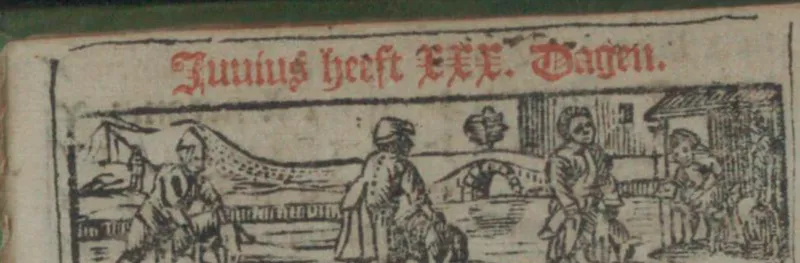
In the sky above Hoorn
No notable event in our sky calendar; the map shows what there is to see.
Planets visible this month
- Mars: in the evening low in the west
- Jupiter: in the evening in the west
- Saturn: in the morning low in the east
These are the positions around the 15th, seen from Hoorn: in the evening at the time shown on the star map (or an hour and a quarter after sunset), and in the morning an hour and a quarter before sunrise.
Find it on the map
Vega in Lyra: a very bright, blue-white star with a small parallelogram of fainter stars beside it. On 16 June at 01.00 it stands high in the southeast.
Phases of the moon: new moon 4 June, first quarter 11 June, full moon 19 June, last quarter 27 June.
| day | old style | sunrise | sunset | moonrise | moonset | moon in the south | moon in the sign |
|---|---|---|---|---|---|---|---|
| Tue 1 e | 19 May | 05.22 | 21.53 | 03.05 | 18.07 | 10.26 | Aries |
| Wed 2 f | 20 | 05.21 | 21.54 | 03.22 | 19.33 | 11.16 | Taurus |
| Thu 3 g | 21 | 05.20 | 21.55 | 03.45 | 21.00 | 12.13 | Taurus |
| Fri 4 a | 22 | 05.20 | 21.56 | 04.18 | 22.22 | 13.14 | Gemini |
| New moon Friday 4 June, at 21.40. | |||||||
| Sat 5 b | 23 | 05.19 | 21.57 | 05.08 | 23.28 | 14.19 | Gemini |
| Sun 6 c | 24 | 05.18 | 21.58 | 06.18 | — | 15.24 | Cancer |
| Mon 7 d | 25 | 05.18 | 21.59 | 07.44 | 00.15 | 16.26 | Cancer |
| Tue 8 e | 26 | 05.17 | 22.00 | 09.16 | 00.47 | 17.24 | Leo |
| Wed 9 f | 27 | 05.17 | 22.01 | 10.48 | 01.09 | 18.17 | Leo |
| Thu 10 g | 28 | 05.16 | 22.01 | 12.15 | 01.25 | 19.07 | Virgo |
| Fri 11 a | 29 | 05.16 | 22.02 | 13.39 | 01.39 | 19.54 | Virgo |
| First quarter Friday 11 June, at 12.56. | |||||||
| Sat 12 b | 30 | 05.16 | 22.03 | 15.00 | 01.51 | 20.39 | Libra |
| Sun 13 c | 31 | 05.15 | 22.03 | 16.21 | 02.04 | 21.25 | Libra |
| Mon 14 d | 1 Jun | 05.15 | 22.04 | 17.41 | 02.17 | 22.13 | Libra |
| Tue 15 e | 2 | 05.15 | 22.05 | 19.00 | 02.34 | 23.02 | Scorpio |
| Wed 16 f | 3 | 05.15 | 22.05 | 20.16 | 02.55 | 23.53 | Scorpio |
| Thu 17 g | 4 | 05.15 | 22.06 | 21.24 | 03.24 | — | Sagittarius |
| Fri 18 a | 5 | 05.15 | 22.06 | 22.20 | 04.04 | 00.45 | Sagittarius |
| Sat 19 b | 6 | 05.15 | 22.06 | 23.03 | 04.57 | 01.38 | Capricorn |
| Full moon Saturday 19 June, at 02.45. | |||||||
| Sun 20 c | 7 | 05.15 | 22.07 | 23.34 | 06.00 | 02.29 | Capricorn |
| Mon 21 d | 8 | 05.15 | 22.07 | 23.56 | 07.10 | 03.19 | Capricorn |
| The sun enters Cancer on 21 June at 16.10. | |||||||
| Tue 22 e | 9 | 05.15 | 22.07 | — | 08.23 | 04.05 | Aquarius |
| Wed 23 f | 10 | 05.16 | 22.07 | 00.13 | 09.36 | 04.49 | Aquarius |
| Thu 24 g | 11 | 05.16 | 22.07 | 00.26 | 10.48 | 05.31 | Pisces |
| Fri 25 a | 12 | 05.16 | 22.07 | 00.37 | 11.59 | 06.11 | Pisces |
| Sat 26 b | 13 | 05.17 | 22.07 | 00.48 | 13.11 | 06.52 | Pisces |
| Sun 27 c | 14 | 05.17 | 22.07 | 00.58 | 14.25 | 07.33 | Aries |
| Last quarter Sunday 27 June, at 06.54. | |||||||
| Mon 28 d | 15 | 05.18 | 22.07 | 01.10 | 15.43 | 08.17 | Aries |
| Tue 29 e | 16 | 05.18 | 22.07 | 01.25 | 17.05 | 09.04 | Taurus |
| Wed 30 f | 17 | 05.19 | 22.06 | 01.44 | 18.30 | 09.56 | Taurus |
July hath XXXI days.
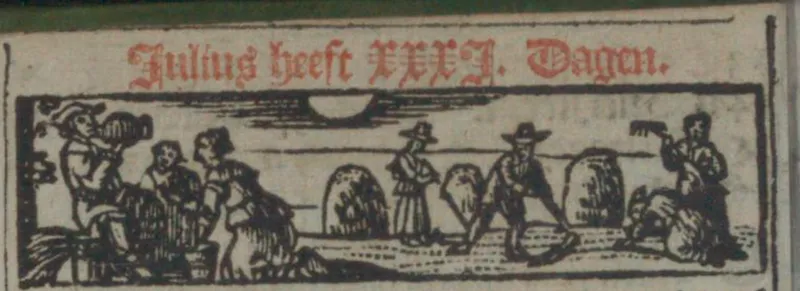
In the sky above Hoorn
- 15 July, 21.29: Mercury at greatest western elongation
Planets visible this month
- Mars: in the evening low in the west
- Saturn: in the morning in the southeast
These are the positions around the 15th, seen from Hoorn: in the evening at the time shown on the star map (or an hour and a quarter after sunset), and in the morning an hour and a quarter before sunrise.
Find it on the map
The Summer Triangle: three bright stars, Vega, Deneb and Altair, together form a large triangle; Vega is the brightest. On 16 July at 00.00 it stands high in the southeast.
Phases of the moon: new moon 4 July, first quarter 10 July, full moon 18 July, last quarter 26 July.
| day | old style | sunrise | sunset | moonrise | moonset | moon in the south | moon in the sign |
|---|---|---|---|---|---|---|---|
| Thu 1 g | 18 Jun | 05.20 | 22.06 | 02.11 | 19.54 | 10.54 | Gemini |
| Fri 2 a | 19 | 05.20 | 22.06 | 02.52 | 21.08 | 11.57 | Gemini |
| Sat 3 b | 20 | 05.21 | 22.05 | 03.52 | 22.05 | 13.03 | Cancer |
| Sun 4 c | 21 | 05.22 | 22.05 | 05.12 | 22.44 | 14.08 | Cancer |
| New moon Sunday 4 July, at 05.02. | |||||||
| Mon 5 d | 22 | 05.23 | 22.04 | 06.45 | 23.11 | 15.10 | Leo |
| Tue 6 e | 23 | 05.24 | 22.04 | 08.21 | 23.30 | 16.07 | Leo |
| Wed 7 f | 24 | 05.25 | 22.03 | 09.53 | 23.45 | 17.00 | Virgo |
| Thu 8 g | 25 | 05.26 | 22.02 | 11.21 | 23.58 | 17.49 | Virgo |
| Fri 9 a | 26 | 05.27 | 22.02 | 12.46 | — | 18.36 | Virgo |
| Sat 10 b | 27 | 05.28 | 22.01 | 14.08 | 00.11 | 19.23 | Libra |
| First quarter Saturday 10 July, at 20.39. | |||||||
| Sun 11 c | 28 | 05.29 | 22.00 | 15.29 | 00.24 | 20.10 | Libra |
| Mon 12 d | 29 | 05.30 | 21.59 | 16.49 | 00.40 | 20.59 | Scorpio |
| Tue 13 e | 30 | 05.31 | 21.58 | 18.06 | 01.00 | 21.50 | Scorpio |
| Wed 14 f | 1 Jul | 05.32 | 21.57 | 19.17 | 01.26 | 22.41 | Sagittarius |
| Thu 15 g | 2 | 05.34 | 21.56 | 20.17 | 02.02 | 23.34 | Sagittarius |
| Fri 16 a | 3 | 05.35 | 21.55 | 21.03 | 02.50 | — | Sagittarius |
| Sat 17 b | 4 | 05.36 | 21.54 | 21.37 | 03.51 | 00.25 | Capricorn |
| Sun 18 c | 5 | 05.37 | 21.53 | 22.02 | 04.59 | 01.15 | Capricorn |
| Full moon Sunday 18 July, at 17.45. | |||||||
| 18 July: a penumbral eclipse of the moon, not visible in Hoorn (the moon is then below the horizon). | |||||||
| Mon 19 d | 6 | 05.39 | 21.52 | 22.20 | 06.11 | 02.02 | Aquarius |
| Tue 20 e | 7 | 05.40 | 21.50 | 22.34 | 07.24 | 02.47 | Aquarius |
| Wed 21 f | 8 | 05.42 | 21.49 | 22.46 | 08.37 | 03.29 | Aquarius |
| Thu 22 g | 9 | 05.43 | 21.48 | 22.56 | 09.48 | 04.10 | Pisces |
| Fri 23 a | 10 | 05.44 | 21.46 | 23.07 | 10.59 | 04.50 | Pisces |
| The sun enters Leo on 23 July at 03.04. | |||||||
| Sat 24 b | 11 | 05.46 | 21.45 | 23.17 | 12.11 | 05.31 | Aries |
| Sun 25 c | 12 | 05.47 | 21.43 | 23.30 | 13.26 | 06.13 | Aries |
| Mon 26 d | 13 | 05.49 | 21.42 | 23.47 | 14.44 | 06.57 | Aries |
| Last quarter Monday 26 July, at 18.55. | |||||||
| Tue 27 e | 14 | 05.50 | 21.40 | — | 16.06 | 07.46 | Taurus |
| Wed 28 f | 15 | 05.52 | 21.39 | 00.09 | 17.29 | 08.40 | Taurus |
| Thu 29 g | 16 | 05.53 | 21.37 | 00.42 | 18.47 | 09.38 | Gemini |
| Fri 30 a | 17 | 05.55 | 21.36 | 01.31 | 19.51 | 10.42 | Gemini |
| Sat 31 b | 18 | 05.56 | 21.34 | 02.40 | 20.38 | 11.46 | Cancer |
August hath XXXI days.
In the sky above Hoorn
- 2 August: partial solar eclipse above Hoorn. It begins at 10.09 and ends at 12.03 (summer time); at the peak, at 11.05, 37 percent of the sun is covered. Never look at the sun without eclipse glasses or a proper solar filter; ordinary sunglasses are not enough.
- 13 August, 10.10: Meteor shower: Perseids
The peak of the Perseids falls on Friday, 13 August, at 10.10, in daylight. Watch in the night of 12 August to 13 from 01.42, when the moon has set, until 04.47, when morning twilight begins. The radiant is then 67° above the horizon.
Planets visible this month
- Saturn: in the morning in the south
These are the positions around the 15th, seen from Hoorn: in the evening at the time shown on the star map (or an hour and a quarter after sunset), and in the morning an hour and a quarter before sunrise.
Find it on the map
Cygnus, also called the Northern Cross: a large cross of stars along the Milky Way, with the bright Deneb at the end of the long bar. On 15 August at 23.00 it stands high in the southeast.
Phases of the moon: new moon 2 August, first quarter 9 August, full moon 17 August, last quarter 25 August, new moon 31 August.
In former times
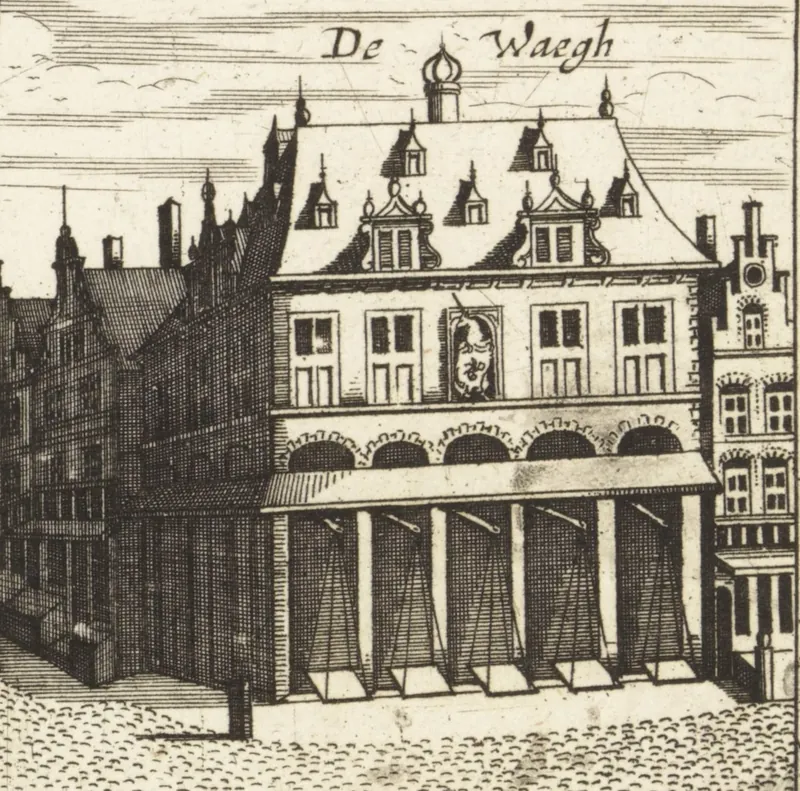
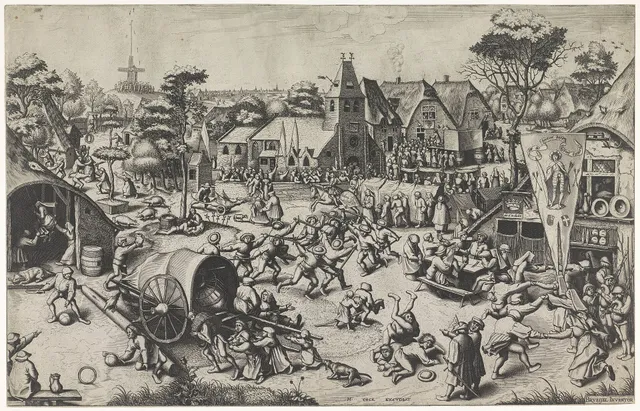
- The fair grew out of the St. Lawrence market, Hoorn’s third annual market, for which the town received a privilege in 1446: seven days, ‘drie voor, en drie na’ (three before and three after) St. Lawrence’s Day, 10 August (Velius). (Velius, Chronyk van Hoorn (1740), p. 64)
- In 1357 Hoorn received the right to an annual fair of fourteen days. In 1629 the town council laid down how long the three annual fairs lasted: the St. Lawrence fair ten days, the Palm fair a week and the Pentecost fair one day. The St. Lawrence fair thus lasted as long as the kermis does today. (Kermis Hoorn, history)
- Because it grew ever busier in the 16th century, the town bought up plots and houses in 1548 and pulled them down: room was needed for the incoming wagons and for a new horse market. (Kermis Hoorn, history)
- Until the war the fair was rung in by the bell of the Grote Kerk, on the Wednesday before the first Sunday. At noon the young people of Hoorn then gave each other and passers-by ‘kermisstrepen,’ chalk marks, ‘until 1939’ (Stins, 1946). According to Kermis Hoorn the bell rang in the fair until 1963. (Stins, De Hoornse kermis 500 jaar (1946), p. 179)
- In 1946 Stins still called the last day ‘een Maandagse lappenmarkt’ (a Monday rag market); according to Wikipedia the name Lappendag came into use after 1919. (Wikipedia, Hoornse kermis en Lappendag)
- In 1871 the children of Hoorn walked through town every evening in the last week of August with lanterns of paper, tin and glass. They called the lanterns ‘Sinte Maartens.’ Why August? The people of Hoorn said November was ‘te guur en te bar’ (too raw and bleak) (ter Gouw). (ter Gouw, De volksvermaken (1871), p. 245–246)

| day | old style | sunrise | sunset | moonrise | moonset | moon in the south | moon in the sign |
|---|---|---|---|---|---|---|---|
| Sun 1 c | 19 Jul | 05.58 | 21.32 | 04.07 | 21.10 | 12.50 | Cancer |
| Mon 2 d | 20 | 06.00 | 21.30 | 05.43 | 21.33 | 13.50 | Leo |
| New moon Monday 2 August, at 12.05. | |||||||
| 2 August: a total solar eclipse. In Hoorn it is partly visible; at 11.05, 37 percent of the sun is covered. | |||||||
| Tue 3 e | 21 | 06.01 | 21.29 | 07.19 | 21.50 | 14.46 | Leo |
| Wed 4 f | 22 | 06.03 | 21.27 | 08.52 | 22.04 | 15.38 | Virgo |
| Thu 5 g | 23 | 06.04 | 21.25 | 10.21 | 22.17 | 16.28 | Virgo |
| Fri 6 a | 24 | 06.06 | 21.23 | 11.47 | 22.31 | 17.16 | Libra |
| Sat 7 b | 25 | 06.08 | 21.21 | 13.11 | 22.46 | 18.05 | Libra |
| Sun 8 c | 26 | 06.09 | 21.20 | 14.34 | 23.04 | 18.54 | Scorpio |
| Mon 9 d | 27 | 06.11 | 21.18 | 15.54 | 23.29 | 19.45 | Scorpio |
| First quarter Monday 9 August, at 06.54. | |||||||
| Tue 10 e | 28 | 06.13 | 21.16 | 17.08 | — | 20.37 | Sagittarius |
| Wed 11 f | 29 | 06.14 | 21.14 | 18.12 | 00.02 | 21.29 | Sagittarius |
| Thu 12 g | 30 | 06.16 | 21.12 | 19.02 | 00.46 | 22.21 | Sagittarius |
| Fri 13 a | 31 | 06.18 | 21.10 | 19.40 | 01.42 | 23.12 | Capricorn |
| Sat 14 b | 1 Aug | 06.19 | 21.08 | 20.07 | 02.49 | — | Capricorn |
| Sun 15 c | 2 | 06.21 | 21.06 | 20.27 | 04.00 | 00.00 | Aquarius |
| Mon 16 d | 3 | 06.23 | 21.03 | 20.42 | 05.13 | 00.45 | Aquarius |
| Tue 17 e | 4 | 06.24 | 21.01 | 20.55 | 06.26 | 01.28 | Aquarius |
| Full moon Tuesday 17 August, at 09.29. | |||||||
| 17 August: a penumbral eclipse of the moon, not visible in Hoorn (the moon is then below the horizon). | |||||||
| Wed 18 f | 5 | 06.26 | 20.59 | 21.06 | 07.38 | 02.10 | Pisces |
| Thu 19 g | 6 | 06.28 | 20.57 | 21.16 | 08.49 | 02.50 | Pisces |
| Fri 20 a | 7 | 06.29 | 20.55 | 21.27 | 10.01 | 03.30 | Aries |
| Sat 21 b | 8 | 06.31 | 20.53 | 21.39 | 11.15 | 04.12 | Aries |
| Sun 22 c | 9 | 06.33 | 20.51 | 21.53 | 12.31 | 04.55 | Aries |
| Mon 23 d | 10 | 06.34 | 20.48 | 22.13 | 13.50 | 05.42 | Taurus |
| The sun enters Virgo on 23 August at 10.13. | |||||||
| Tue 24 e | 11 | 06.36 | 20.46 | 22.40 | 15.11 | 06.32 | Taurus |
| Wed 25 f | 12 | 06.38 | 20.44 | 23.21 | 16.29 | 07.28 | Gemini |
| Last quarter Wednesday 25 August, at 04.27. | |||||||
| Thu 26 g | 13 | 06.39 | 20.42 | — | 17.37 | 08.27 | Gemini |
| Fri 27 a | 14 | 06.41 | 20.40 | 00.19 | 18.30 | 09.29 | Cancer |
| Sat 28 b | 15 | 06.43 | 20.37 | 01.37 | 19.07 | 10.31 | Cancer |
| Sun 29 c | 16 | 06.44 | 20.35 | 03.07 | 19.34 | 11.32 | Leo |
| Mon 30 d | 17 | 06.46 | 20.33 | 04.41 | 19.53 | 12.29 | Leo |
| Tue 31 e | 18 | 06.48 | 20.30 | 06.15 | 20.09 | 13.23 | Virgo |
| New moon Tuesday 31 August, at 19.41. | |||||||
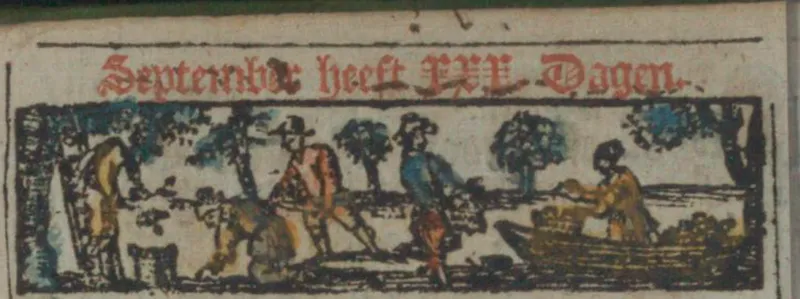
September hath XXX days.
In the sky above Hoorn
- 25 September, 00.06: Mercury at greatest eastern elongation
Planets visible this month
- Saturn: all night; in the evening low in the east
These are the positions around the 15th, seen from Hoorn: in the evening at the time shown on the star map (or an hour and a quarter after sunset), and in the morning an hour and a quarter before sunrise.
Find it on the map
The Great Square of Pegasus: four stars of about equal brightness in a large square, with few stars inside it. On 15 September at 22.00 it stands in the east.
Phases of the moon: first quarter 7 September, full moon 16 September, last quarter 23 September, new moon 30 September.
| day | old style | sunrise | sunset | moonrise | moonset | moon in the south | moon in the sign |
|---|---|---|---|---|---|---|---|
| Wed 1 f | 19 Aug | 06.49 | 20.28 | 07.47 | 20.22 | 14.14 | Virgo |
| Thu 2 g | 20 | 06.51 | 20.26 | 09.16 | 20.36 | 15.04 | Libra |
| Fri 3 a | 21 | 06.53 | 20.24 | 10.43 | 20.51 | 15.54 | Libra |
| Sat 4 b | 22 | 06.54 | 20.21 | 12.10 | 21.08 | 16.45 | Scorpio |
| Sun 5 c | 23 | 06.56 | 20.19 | 13.33 | 21.31 | 17.37 | Scorpio |
| Mon 6 d | 24 | 06.58 | 20.17 | 14.52 | 22.01 | 18.29 | Scorpio |
| Tue 7 e | 25 | 06.59 | 20.14 | 16.02 | 22.42 | 19.23 | Sagittarius |
| First quarter Tuesday 7 September, at 20.31. | |||||||
| Wed 8 f | 26 | 07.01 | 20.12 | 16.58 | 23.35 | 20.16 | Sagittarius |
| Thu 9 g | 27 | 07.03 | 20.09 | 17.40 | — | 21.07 | Capricorn |
| Fri 10 a | 28 | 07.04 | 20.07 | 18.11 | 00.38 | 21.56 | Capricorn |
| Sat 11 b | 29 | 07.06 | 20.05 | 18.33 | 01.48 | 22.42 | Capricorn |
| Sun 12 c | 30 | 07.08 | 20.02 | 18.50 | 03.00 | 23.26 | Aquarius |
| Mon 13 d | 31 | 07.09 | 20.00 | 19.03 | 04.13 | — | Aquarius |
| Tue 14 e | 1 Sept | 07.11 | 19.58 | 19.15 | 05.26 | 00.08 | Pisces |
| Wed 15 f | 2 | 07.13 | 19.55 | 19.25 | 06.37 | 00.49 | Pisces |
| Thu 16 g | 3 | 07.15 | 19.53 | 19.36 | 07.50 | 01.30 | Pisces |
| Full moon Thursday 16 September, at 01.04. | |||||||
| Fri 17 a | 4 | 07.16 | 19.50 | 19.48 | 09.03 | 02.11 | Aries |
| Sat 18 b | 5 | 07.18 | 19.48 | 20.02 | 10.19 | 02.54 | Aries |
| Sun 19 c | 6 | 07.20 | 19.46 | 20.20 | 11.38 | 03.40 | Taurus |
| Mon 20 d | 7 | 07.21 | 19.43 | 20.45 | 12.58 | 04.29 | Taurus |
| Tue 21 e | 8 | 07.23 | 19.41 | 21.20 | 14.17 | 05.23 | Gemini |
| Wed 22 f | 9 | 07.25 | 19.38 | 22.11 | 15.27 | 06.20 | Gemini |
| Thu 23 g | 10 | 07.26 | 19.36 | 23.20 | 16.24 | 07.20 | Gemini |
| Last quarter Thursday 23 September, at 12.21. | |||||||
| The sun enters Libra on 23 September at 08.01. | |||||||
| Fri 24 a | 11 | 07.28 | 19.34 | — | 17.05 | 08.20 | Cancer |
| Sat 25 b | 12 | 07.30 | 19.31 | 00.43 | 17.35 | 09.19 | Cancer |
| Sun 26 c | 13 | 07.31 | 19.29 | 02.12 | 17.56 | 10.16 | Leo |
| Mon 27 d | 14 | 07.33 | 19.27 | 03.44 | 18.13 | 11.09 | Leo |
| Tue 28 e | 15 | 07.35 | 19.24 | 05.14 | 18.28 | 12.01 | Virgo |
| Wed 29 f | 16 | 07.36 | 19.22 | 06.43 | 18.41 | 12.51 | Virgo |
| Thu 30 g | 17 | 07.38 | 19.19 | 08.11 | 18.55 | 13.41 | Libra |
| New moon Thursday 30 September, at 04.36. | |||||||
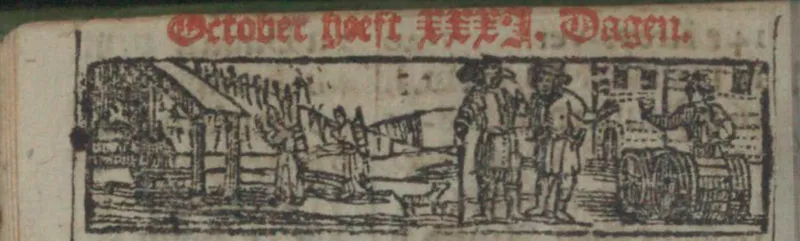
October hath XXXI days.
In the sky above Hoorn
- 11 October, 16.14: Conjunction of Mercury and Venus
- 18 October, 02.18: Saturn at opposition
- 22 October, 02.34: Meteor shower: Orionids
Planets visible this month
- Jupiter: in the morning in the east
- Saturn: all night; in the evening low in the east
These are the positions around the 15th, seen from Hoorn: in the evening at the time shown on the star map (or an hour and a quarter after sunset), and in the morning an hour and a quarter before sunrise.
Find it on the map
Cassiopeia: five stars in the shape of a W or an M, on the other side of the North Star from the Great Bear. On 15 October at 20.00 it stands high in the northeast.
Phases of the moon: first quarter 7 October, full moon 15 October, last quarter 22 October, new moon 29 October.
| day | old style | sunrise | sunset | moonrise | moonset | moon in the south | moon in the sign |
|---|---|---|---|---|---|---|---|
| Fri 1 a | 18 Sept | 07.40 | 19.17 | 09.38 | 19.12 | 14.32 | Libra |
| Sat 2 b | 19 | 07.42 | 19.15 | 11.05 | 19.33 | 15.24 | Scorpio |
| Sun 3 c | 20 | 07.43 | 19.12 | 12.28 | 20.00 | 16.18 | Scorpio |
| Mon 4 d | 21 | 07.45 | 19.10 | 13.44 | 20.37 | 17.12 | Sagittarius |
| Tue 5 e | 22 | 07.47 | 19.08 | 14.47 | 21.26 | 18.06 | Sagittarius |
| Wed 6 f | 23 | 07.49 | 19.05 | 15.35 | 22.26 | 18.59 | Capricorn |
| Thu 7 g | 24 | 07.50 | 19.03 | 16.11 | 23.34 | 19.49 | Capricorn |
| First quarter Thursday 7 October, at 13.48. | |||||||
| Fri 8 a | 25 | 07.52 | 19.01 | 16.36 | — | 20.37 | Capricorn |
| Sat 9 b | 26 | 07.54 | 18.58 | 16.55 | 00.46 | 21.22 | Aquarius |
| Sun 10 c | 27 | 07.56 | 18.56 | 17.10 | 01.59 | 22.04 | Aquarius |
| Mon 11 d | 28 | 07.57 | 18.54 | 17.22 | 03.11 | 22.46 | Pisces |
| Tue 12 e | 29 | 07.59 | 18.52 | 17.33 | 04.23 | 23.26 | Pisces |
| Wed 13 f | 30 | 08.01 | 18.49 | 17.44 | 05.35 | — | Pisces |
| Thu 14 g | 1 Oct | 08.03 | 18.47 | 17.56 | 06.48 | 00.08 | Aries |
| Fri 15 a | 2 | 08.04 | 18.45 | 18.09 | 08.04 | 00.51 | Aries |
| Full moon Friday 15 October, at 15.47. | |||||||
| Sat 16 b | 3 | 08.06 | 18.43 | 18.27 | 09.23 | 01.36 | Taurus |
| Sun 17 c | 4 | 08.08 | 18.41 | 18.50 | 10.44 | 02.25 | Taurus |
| Mon 18 d | 5 | 08.10 | 18.38 | 19.22 | 12.04 | 03.18 | Taurus |
| Tue 19 e | 6 | 08.12 | 18.36 | 20.09 | 13.18 | 04.15 | Gemini |
| Wed 20 f | 7 | 08.13 | 18.34 | 21.12 | 14.19 | 05.15 | Gemini |
| Thu 21 g | 8 | 08.15 | 18.32 | 22.30 | 15.05 | 06.15 | Cancer |
| Fri 22 a | 9 | 08.17 | 18.30 | 23.56 | 15.37 | 07.13 | Cancer |
| Last quarter Friday 22 October, at 19.29. | |||||||
| Sat 23 b | 10 | 08.19 | 18.28 | — | 16.00 | 08.09 | Leo |
| The sun enters Scorpio on 23 October at 17.32. | |||||||
| Sun 24 c | 11 | 08.21 | 18.26 | 01.25 | 16.18 | 09.02 | Leo |
| Mon 25 d | 12 | 08.22 | 18.23 | 02.52 | 16.33 | 09.53 | Virgo |
| Tue 26 e | 13 | 08.24 | 18.21 | 04.18 | 16.47 | 10.42 | Virgo |
| Wed 27 f | 14 | 08.26 | 18.19 | 05.44 | 17.01 | 11.30 | Libra |
| Thu 28 g | 15 | 08.28 | 18.17 | 07.10 | 17.16 | 12.20 | Libra |
| Fri 29 a | 16 | 08.30 | 18.15 | 08.36 | 17.35 | 13.11 | Scorpio |
| New moon Friday 29 October, at 15.37. | |||||||
| Sat 30 b | 17 | 08.32 | 18.13 | 10.00 | 17.59 | 14.04 | Scorpio |
| Sun 31 c | 18 | 07.33 | 17.12 | 10.20 | 17.32 | 13.59 | Sagittarius |
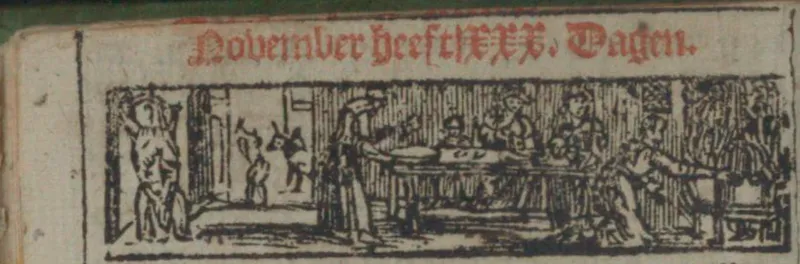
November hath XXX days.
In the sky above Hoorn
- 4 November, 09.55: Mercury at greatest western elongation
- 18 November, 07.37: Meteor shower: Leonids
- 25 November, 01.39: Conjunction of Venus and Mars
Planets visible this month
- Jupiter: in the morning in the southeast
- Saturn: in the evening in the southeast
These are the positions around the 15th, seen from Hoorn: in the evening at the time shown on the star map (or an hour and a quarter after sunset), and in the morning an hour and a quarter before sunrise.
Find it on the map
The Pleiades: a small, bright group of stars; with the naked eye you see six or seven of them. On 15 November at 19.00 it stands in the east.
Phases of the moon: first quarter 6 November, full moon 14 November, last quarter 21 November, new moon 28 November.
In former times
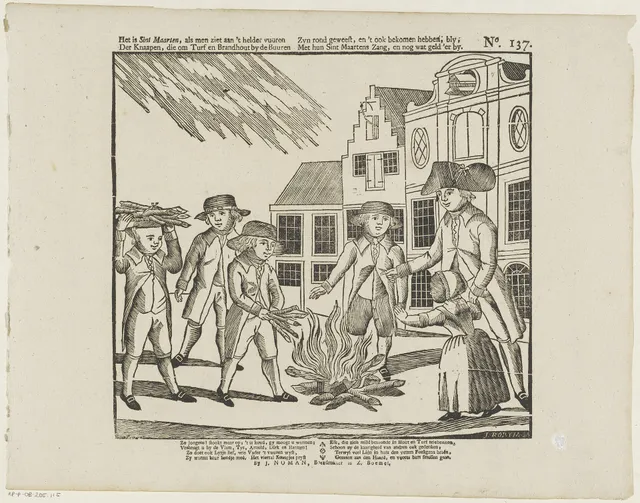
- On St. Martin’s Eve, boys used to walk along the whole coast, from Kennemerland to the Weser in Germany, first with burning torches and later with paper lanterns or hollowed-out carrots holding a candle (ter Gouw). In Hoorn it was different: in 1871 the children there walked with their lanterns in the last week of August. (ter Gouw, De volksvermaken (1871), p. 239)

| day | old style | sunrise | sunset | moonrise | moonset | moon in the south | moon in the sign |
|---|---|---|---|---|---|---|---|
| Mon 1 d | 19 Oct | 07.35 | 17.10 | 11.30 | 18.16 | 14.54 | Sagittarius |
| Tue 2 e | 20 | 07.37 | 17.08 | 12.26 | 19.13 | 15.48 | Sagittarius |
| Wed 3 f | 21 | 07.39 | 17.06 | 13.07 | 20.19 | 16.40 | Capricorn |
| Thu 4 g | 22 | 07.41 | 17.04 | 13.37 | 21.30 | 17.30 | Capricorn |
| Fri 5 a | 23 | 07.43 | 17.02 | 13.58 | 22.43 | 18.16 | Aquarius |
| Sat 6 b | 24 | 07.45 | 17.01 | 14.14 | 23.55 | 18.59 | Aquarius |
| First quarter Saturday 6 November, at 09.00. | |||||||
| Sun 7 c | 25 | 07.46 | 16.59 | 14.28 | — | 19.41 | Aquarius |
| Mon 8 d | 26 | 07.48 | 16.57 | 14.39 | 01.06 | 20.21 | Pisces |
| Tue 9 e | 27 | 07.50 | 16.55 | 14.50 | 02.17 | 21.02 | Pisces |
| Wed 10 f | 28 | 07.52 | 16.54 | 15.02 | 03.29 | 21.44 | Aries |
| Thu 11 g | 29 | 07.54 | 16.52 | 15.15 | 04.43 | 22.28 | Aries |
| Fri 12 a | 30 | 07.56 | 16.51 | 15.31 | 06.01 | 23.16 | Aries |
| Sat 13 b | 31 | 07.57 | 16.49 | 15.52 | 07.22 | — | Taurus |
| Sun 14 c | 1 Nov | 07.59 | 16.48 | 16.21 | 08.45 | 00.09 | Taurus |
| Full moon Sunday 14 November, at 04.26. | |||||||
| Mon 15 d | 2 | 08.01 | 16.46 | 17.04 | 10.03 | 01.05 | Gemini |
| Tue 16 e | 3 | 08.03 | 16.45 | 18.03 | 11.11 | 02.06 | Gemini |
| Wed 17 f | 4 | 08.05 | 16.43 | 19.19 | 12.02 | 03.07 | Cancer |
| Thu 18 g | 5 | 08.06 | 16.42 | 20.44 | 12.39 | 04.08 | Cancer |
| Fri 19 a | 6 | 08.08 | 16.41 | 22.12 | 13.05 | 05.05 | Leo |
| Sat 20 b | 7 | 08.10 | 16.39 | 23.40 | 13.24 | 05.59 | Leo |
| Sun 21 c | 8 | 08.11 | 16.38 | — | 13.40 | 06.50 | Virgo |
| Last quarter Sunday 21 November, at 01.48. | |||||||
| Mon 22 d | 9 | 08.13 | 16.37 | 01.04 | 13.54 | 07.38 | Virgo |
| The sun enters Sagittarius on 22 November at 14.16. | |||||||
| Tue 23 e | 10 | 08.15 | 16.36 | 02.28 | 14.07 | 08.26 | Libra |
| Wed 24 f | 11 | 08.17 | 16.35 | 03.51 | 14.21 | 09.13 | Libra |
| Thu 25 g | 12 | 08.18 | 16.34 | 05.14 | 14.38 | 10.03 | Libra |
| Fri 26 a | 13 | 08.20 | 16.33 | 06.38 | 15.00 | 10.54 | Scorpio |
| Sat 27 b | 14 | 08.21 | 16.32 | 07.59 | 15.29 | 11.47 | Scorpio |
| Sun 28 c | 15 | 08.23 | 16.31 | 09.13 | 16.08 | 12.42 | Sagittarius |
| New moon Sunday 28 November, at 04.24. | |||||||
| Mon 29 d | 16 | 08.24 | 16.30 | 10.14 | 17.00 | 13.37 | Sagittarius |
| Tue 30 e | 17 | 08.26 | 16.29 | 11.02 | 18.03 | 14.30 | Capricorn |
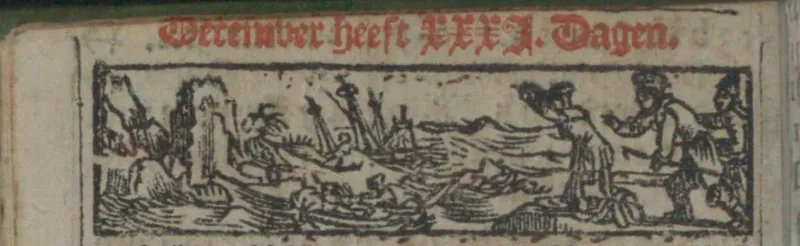
December hath XXXI days.
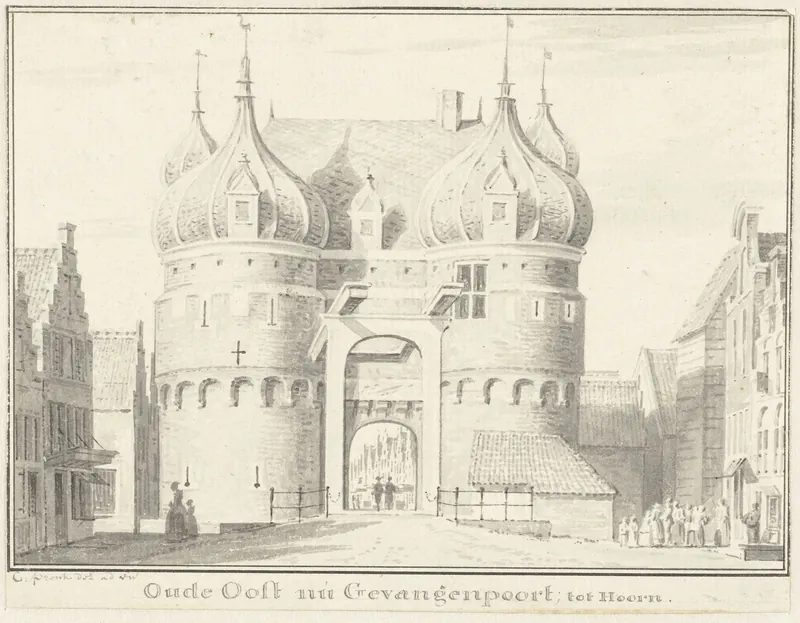
In the sky above Hoorn
- 14 December, 20.48: Meteor shower: Geminids
Planets visible this month
- Venus: in the evening low in the southwest
- Jupiter: in the morning in the south
- Saturn: in the evening in the southeast
These are the positions around the 15th, seen from Hoorn: in the evening at the time shown on the star map (or an hour and a quarter after sunset), and in the morning an hour and a quarter before sunrise.
Find it on the map
Capella in Auriga: a bright, yellow-white star on the edge of a large pentagon of stars. On 15 December at 18.00 it stands in the northeast.
Phases of the moon: first quarter 6 December, full moon 13 December, last quarter 20 December, new moon 27 December.
In former times
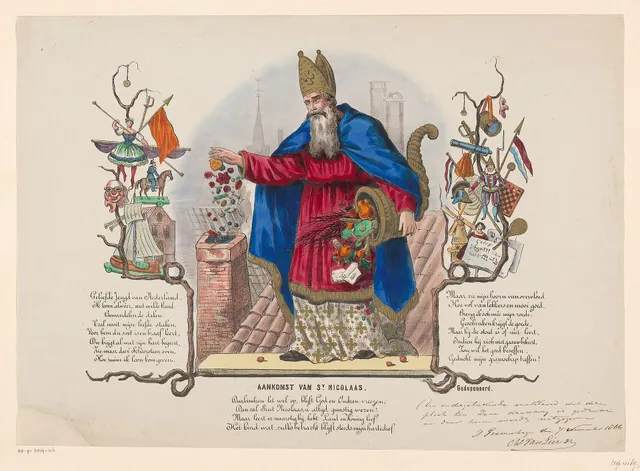
- St. Nicholas was the patron saint of seafarers; in every port the skippers and sailors celebrated his feast the loudest (ter Gouw). (ter Gouw, De volksvermaken (1871), p. 256–257)
- At Christmas and Easter, people in Holland put a large festive loaf on the table: the duivekater (ter Gouw). (ter Gouw, De volksvermaken (1871), p. 168)

| day | old style | sunrise | sunset | moonrise | moonset | moon in the south | moon in the sign |
|---|---|---|---|---|---|---|---|
| Wed 1 f | 18 Nov | 08.27 | 16.29 | 11.36 | 19.14 | 15.21 | Capricorn |
| Thu 2 g | 19 | 08.29 | 16.28 | 12.00 | 20.26 | 16.09 | Capricorn |
| Fri 3 a | 20 | 08.30 | 16.27 | 12.19 | 21.39 | 16.53 | Aquarius |
| Sat 4 b | 21 | 08.32 | 16.27 | 12.33 | 22.50 | 17.35 | Aquarius |
| Sun 5 c | 22 | 08.33 | 16.26 | 12.45 | — | 18.16 | Pisces |
| Mon 6 d | 23 | 08.34 | 16.26 | 12.56 | 00.00 | 18.56 | Pisces |
| First quarter Monday 6 December, at 06.22. | |||||||
| Tue 7 e | 24 | 08.36 | 16.25 | 13.07 | 01.10 | 19.37 | Pisces |
| Wed 8 f | 25 | 08.37 | 16.25 | 13.19 | 02.22 | 20.19 | Aries |
| Thu 9 g | 26 | 08.38 | 16.25 | 13.34 | 03.37 | 21.05 | Aries |
| Fri 10 a | 27 | 08.39 | 16.25 | 13.52 | 04.56 | 21.55 | Taurus |
| Sat 11 b | 28 | 08.40 | 16.24 | 14.17 | 06.17 | 22.50 | Taurus |
| Sun 12 c | 29 | 08.41 | 16.24 | 14.54 | 07.39 | 23.49 | Gemini |
| Mon 13 d | 30 | 08.42 | 16.24 | 15.47 | 08.53 | — | Gemini |
| Full moon Monday 13 December, at 17.09. | |||||||
| Tue 14 e | 1 Dec | 08.43 | 16.24 | 16.58 | 09.53 | 00.52 | Cancer |
| Wed 15 f | 2 | 08.44 | 16.24 | 18.23 | 10.37 | 01.55 | Cancer |
| Thu 16 g | 3 | 08.45 | 16.24 | 19.54 | 11.07 | 02.56 | Leo |
| Fri 17 a | 4 | 08.46 | 16.25 | 21.24 | 11.29 | 03.53 | Leo |
| Sat 18 b | 5 | 08.46 | 16.25 | 22.52 | 11.46 | 04.46 | Virgo |
| Sun 19 c | 6 | 08.47 | 16.25 | — | 12.01 | 05.36 | Virgo |
| Mon 20 d | 7 | 08.48 | 16.26 | 00.16 | 12.14 | 06.24 | Virgo |
| Last quarter Monday 20 December, at 10.11. | |||||||
| Tue 21 e | 8 | 08.48 | 16.26 | 01.39 | 12.28 | 07.11 | Libra |
| Wed 22 f | 9 | 08.49 | 16.27 | 03.02 | 12.44 | 07.59 | Libra |
| The sun enters Capricorn on 22 December at 03.42. | |||||||
| Thu 23 g | 10 | 08.49 | 16.27 | 04.24 | 13.04 | 08.49 | Scorpio |
| Fri 24 a | 11 | 08.50 | 16.28 | 05.44 | 13.29 | 09.41 | Scorpio |
| Sat 25 bChristmas Day | 12 | 08.50 | 16.28 | 07.00 | 14.04 | 10.34 | Sagittarius |
| Sun 26 cBoxing Day | 13 | 08.50 | 16.29 | 08.05 | 14.51 | 11.28 | Sagittarius |
| Mon 27 d | 14 | 08.50 | 16.30 | 08.57 | 15.50 | 12.22 | Capricorn |
| New moon Monday 27 December, at 21.12. | |||||||
| Tue 28 e | 15 | 08.51 | 16.31 | 09.35 | 16.58 | 13.14 | Capricorn |
| Wed 29 f | 16 | 08.51 | 16.32 | 10.03 | 18.11 | 14.03 | Capricorn |
| Thu 30 g | 17 | 08.51 | 16.33 | 10.23 | 19.23 | 14.48 | Aquarius |
| Fri 31 a | 18 | 08.51 | 16.34 | 10.39 | 20.35 | 15.31 | Aquarius |
Special pages
The solar eclipse of 2 August 2027, in Hoorn
On Monday, 2 August 2027, the moon passes in front of the sun. In Spain and North Africa the eclipse is total; in Hoorn the moon covers 37 percent of the sun at its peak.
Start 10.09, peak 11.05 (the sun is then 43° high), end 12.03.
Never look at the sun without eclipse glasses, not even when most of it is covered.
How Van Nierop and Van Dam calculated
The almanac makers of Hoorn calculated by hand. The patent of 1709 protected ‘de Uitrekening der watergetyden, mitsgaders des Maans op- en ondergang’ (the calculation of the tides and of the rising and setting of the moon) and their books of calculation, from the Nederduytse Astronomia to Van Dam’s Nieuwe Hoornse Schatkamer.
A table from the same period shows what such a number looked like: the ‘Tafel van ’t verschil des tijds tusschen Zon en Maan, Anno 1690’ gives for each day the hour at which the moon is in the south, in apparent solar time. That is the column ‘moon in the south’ in this almanac. Below, that table is shown next to our calculation.
How exactly the family calculated, with which tables and how often they worked out the moon anew, we do not know: we have not read their books of calculation. The hours of the moon in their almanac for 1700 differ by 10 to 25 minutes from our calculation. This almanac calculates with Astronomy Engine, to the minute.
Gietermaker’s table ‘Van 't verschil des tijds tusschen Zon en Maan’ gives, for each day, the hour at which the moon stands in the south. We calculated the same for Hoorn, in apparent solar time. The difference is about 12 minutes on average; every half month it grows to almost half an hour and jumps back around new and full moon.
All values as a table
| day | table (hour) | calculated (hour) | difference (min) |
|---|---|---|---|
| 1 | 5.09 | 5.01 | +8 |
| 2 | 5.45 | 5.42 | +3 |
| 3 | 6.29 | 6.23 | +6 |
| 4 | 7.14 | 7.05 | +9 |
| 5 | 7.56 | 7.48 | +8 |
| 6 | 8.39 | 8.34 | +5 |
| 7 | 9.24 | 9.22 | +2 |
| 8 | 10.14 | 10.13 | +1 |
| 9 | 11.06 | 11.05 | +1 |
| 10 | 11.55 | 11.56 | -1 |
| 11 | 12.44 | 12.47 | -3 |
| 12 | 13.29 | 13.35 | -6 |
| 13 | 14.11 | 14.20 | -9 |
| 14 | 14.54 | 15.04 | -10 |
| 15 | 15.37 | 15.48 | -11 |
| 16 | 16.21 | 16.31 | -10 |
| 17 | 17.05 | 17.17 | -12 |
| 18 | 17.51 | 18.06 | -15 |
| 19 | 18.40 | 18.59 | -19 |
| 20 | 19.35 | 19.58 | -23 |
| 21 | 20.38 | 21.02 | -24 |
| 22 | 21.42 | 22.08 | -26 |
| 23 | 22.45 | 23.13 | -28 |
| 24 | 23.44 | 0.13 | -29 |
| 25 | 0.37 | 0.13 | +24 |
| 26 | 1.26 | 1.08 | +18 |
| 27 | 2.12 | 1.57 | +15 |
| 28 | 2.55 | 2.43 | +12 |
| 29 | 3.37 | 3.27 | +10 |
| 30 | 4.17 | 4.09 | +8 |
| 31 | 4.59 | 4.51 | +8 |
| day | table (hour) | calculated (hour) | difference (min) |
|---|---|---|---|
| 1 | 7.09 | 7.01 | +8 |
| 2 | 8.01 | 7.53 | +8 |
| 3 | 8.59 | 8.51 | +8 |
| 4 | 10.01 | 9.54 | +7 |
| 5 | 11.02 | 11.02 | 0 |
| 6 | 12.05 | 12.09 | -4 |
| 7 | 13.05 | 13.13 | -8 |
| 8 | 14.01 | 14.11 | -10 |
| 9 | 14.53 | 15.03 | -10 |
| 10 | 15.40 | 15.51 | -11 |
| 11 | 16.25 | 16.36 | -11 |
| 12 | 17.07 | 17.19 | -12 |
| 13 | 17.51 | 18.03 | -12 |
| 14 | 18.34 | 18.47 | -13 |
| 15 | 19.20 | 19.33 | -13 |
| 16 | 20.07 | 20.21 | -14 |
| 17 | 20.56 | 21.11 | -15 |
| 18 | 21.41 | 22.02 | -21 |
| 19 | 22.31 | 22.54 | -23 |
| 20 | 23.19 | 23.44 | -25 |
| 21 | 0.06 | 23.44 | +22 |
| 22 | 0.52 | 0.32 | +20 |
| 23 | 1.34 | 1.18 | +16 |
| 24 | 2.15 | 2.01 | +14 |
| 25 | 2.56 | 2.44 | +12 |
| 26 | 3.40 | 3.26 | +14 |
| 27 | 4.21 | 4.09 | +12 |
| 28 | 5.04 | 4.54 | +10 |
| 29 | 5.52 | 5.43 | +9 |
| 30 | 6.44 | 6.36 | +8 |
| 31 | 7.41 | 7.36 | +5 |
At the back
School holidays, region North
Hoorn, like all of North Holland, is in region North.
- Christmas holiday: 19 December 2026 through 3 January 2027
- Spring half-term: 20 February 2027 through 28 February 2027
- May holiday: 24 April 2027 through 2 May 2027
- Summer holiday: 10 July 2027 through 22 August 2027
- Autumn half-term: 16 October 2027 through 24 October 2027
- Christmas holiday: 25 December 2027 through 9 January 2028
Source: the Dutch government (school years 2026–2027 and 2027–2028). Schools may depart from the recommended dates; check the school guide.
Markets in Hoorn
- Saturday: binnenstad, from 9.00 to 17.00 (Nieuwstraat, Gouw, Gedempte Turfhaven en het Breed).
- Tuesday: Kersenboogerd, from 8.30 to 16.00 (Betje Wolffplein).
- Wednesday: Risdam, from 8.30 to 16.00 (bij winkelcentrum de Huesmolen).
- Spring market: Wednesday 21 April, from 8.30 to 17.00 in the town centre (derde woensdag in april).
- Lappendag market: Monday 16 August, from 6.00 to 15.00 in the town centre (derde maandag van augustus).
- Autumn market: Wednesday 10 November, from 9.00 to 17.00 in the town centre (woensdag na de tweede dinsdag in november).
Source: the municipality of Hoorn. The dates for 2027 are calculated with the rule the municipality gives.
In the almanac of 1700, Hoorn was already listed among the leather markets: on the Monday after Shrovetide, the Thursday after Pentecost, 26 July and 2 November.
Tides
The title page of the almanac of 1700 promised the hours of high and low water at new and full moon. Hoorn has had no tide since the Afsluitdijk closed off the Zuiderzee in 1932. The real tides of five harbours along the coast (Den Helder, Harlingen, IJmuiden, Hoek van Holland and Vlissingen) are on our page Moon phase and tides.
Who made these almanacs
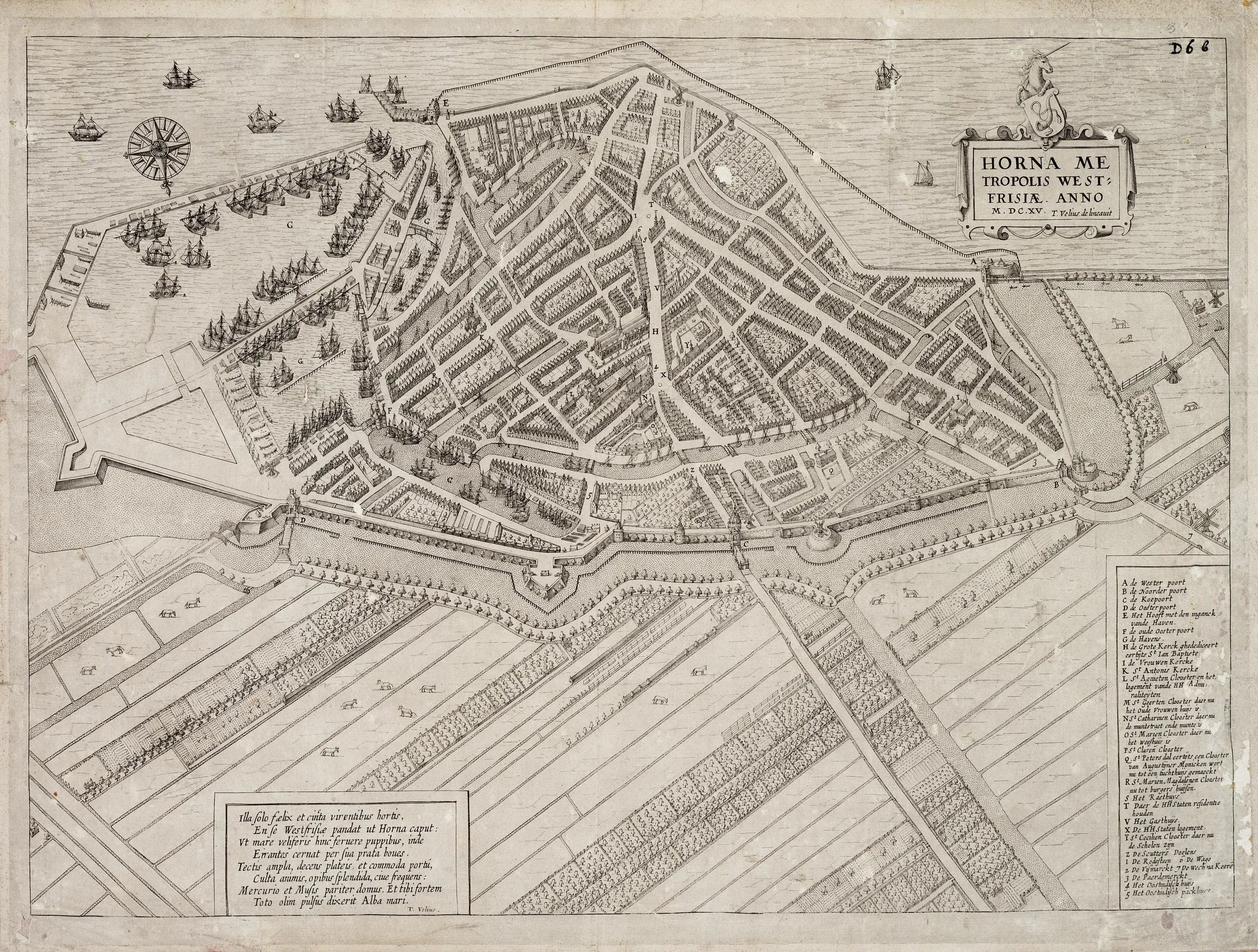
In Hoorn, the Van Nierop and Van Dam family calculated the tables for almanacs for a century and a half. The shoemaker and astronomer Dirck Rembrantsz van Nierop began this work in 1654. In 1709 Jan Albertsz van Dam received a patent for calculating the tides and the rising and setting of the moon, and the Van Dam family kept doing that work until Dirk Jansz van Dam died in 1780. The woodcuts on this page come from the almanac for 1700 by Pieter Rembrantsz van Nierop. The full story, including the dispute with Isaac Haringhuysen, is on the page The almanac makers of Hoorn.
Sources
- Almanak, na den nieuwen en ouden-stijl, op het jaar 1700, calculated by Pieter Rembrantsz van Nierop (Amsterdam, Gillis Joosten Zaagman), Koninklijke Bibliotheek, The Hague, 141 E 18; scan on Wikimedia Commons. The Hoorn Almanac 2027 follows the layout of this almanac, and the woodcuts for the months come from this copy. Public domain according to Commons.
- Government of the Netherlands (Rijksoverheid), official public holidays. Holidays 2027, read on 14 November 2026.
- Algemene termijnenwet (General Time Limits Act), article 3 (wetten.overheid.nl). Which days are generally recognised public holidays.
- Government of the Netherlands (Rijksoverheid), school holidays 2026–2027 and 2027–2028; school holiday regions. Region North, read on 14 November 2026.
- Municipality of Hoorn, Markten in Hoorn. Weekly and annual markets, read on 14 November 2026.
- Olfert Dapper, Gedenkwaerdig bedryf der Nederlandsche Oost-Indische maetschappye, op de kuste en in het keizerrijk van Taising of Sina (Amsterdam, Jacob van Meurs, 1670), pp. 499–500; scan on archive.org. The names of the 24 solar terms (p. 499) and the Chinese New Year (p. 500), checked on the scan.
- Etymologiebank (Dutch Language Institute): the entries louwmaand, sprokkelmaand, lentemaand, gras, bloeien, juni, hooimaand, oogst, herfst, oktober, november and winter. Source of the old month names, including the Etymologisch woordenboek van het Nederlands (Philippa et al.), De Vries (1971) and Franck and Van Wijk (1936). Read on 14 November 2026.
- Kermis Hoorn (the organisers), home page, programme and the item on the fireworks. The dates of the 2027 fair; for the fireworks only the 2026 date (the 2027 date is not yet known). Read on 14 November 2026.
- Municipality of Hoorn, Kermis. The rule for the dates of the fair, read on 14 November 2026.
- Municipality of Hoorn, Intocht Sinterklaas. The arrival in the harbour (2026), read on 14 November 2026.
- Iournael ofte Beschrijvinghe van de wonderlijcke reyse, gedaen door Willem Cornelisz. Schouten van Hoorn (Hoorn, Isaac Willemsz for Jan Jansz Deutel, 1648); John Carter Brown Library scan on archive.org. Cape Horn (p. 17), the departure (first page), the burning of the yacht Hoorn (p. 14) and the homecoming (p. 52), checked on the scan.
- M. Rijks (ed.), The Correspondence of Dirck Rembrantsz van Nierop (1610–1682), Huygens ING, The Hague 2012 (PDF from the KNAW). The letters of 1659, the patent of 1709 and the dates of the Van Nierop and Van Dam family; printed page numbers.
- Th. Velius, Chronyk van Hoorn (1740 edition), Bavarian State Library. Bossu in Hoorn, 12 October 1573 (p. 400), checked on the scan.
- Astronomy Engine (Don Cross), the calculation engine. Sun, moon, phases, eclipses and seasons, calculated for Hoorn (52.64° N, 5.06° E).