Almanac · Chinese calendar
Chinese almanac (Tong Shu)
The Chinese almanac (通書, tōngshū, also 黃曆, huánglì) lists a fixed set of features for every day: the pillars of the year, month and day, the Chinese date, the twelve officers of the day, the mansion of the day, the nine stars and more. We calculate them by the rules of the 協紀辨方書 (Xiéjì biànfāng shū), the handbook of the Qing court. Below is today’s almanac; use the date picker to see any day from 1900 through 2053.
Date in China Standard Time (UTC+8). In the UK, this page therefore already shows tomorrow from 4 p.m. (GMT) or 5 p.m. (BST).
The classical core
Calculated by the rules of the 協紀辨方書; where the book gives no conclusive rule, the ⓘ next to the field says so.
- Year, month and day
協紀辨方書 卷1, 卷3 · primary source
- Year 丙午 bǐng wǔ (Fire, Horse)
- Month 己亥 jǐ hài (Earth, Pig)
- Day 甲午 jiǎ wǔ (Wood, Horse)
The year of the pillars changes at 立春 (lìchūn), the beginning of spring around 4 February; the month changes at each 節 (jié), the solar term that opens a month. This month began with 立冬.
- Chinese date
協紀辨方書 卷12 · primary source
十月初八 · day 8 of month 10, year 丙午 (Horse)
The Chinese date counts lunar months: a month begins on the day of the new moon in UTC+8, and the year begins with Chinese New Year.
- Solar term
協紀辨方書 卷1, 卷3 · primary source
No solar term begins on this day; the almanac month began with 立冬.
- Day officer (建除)
協紀辨方書 卷4 義例二 · primary source
危 wēi · “danger”
危 is the 8th of the twelve officers of the day. They follow one another day by day in a fixed order; 建, the first, falls on the day whose branch matches the month. Because of this, the series pauses for one day whenever a new 節 month begins: the first day of that month gets the same officer as the day before.
- Day guardian (值神)
協紀辨方書 卷7 義例五 · primary source
青龍 qīnglóng · “Azure Dragon” 黃道, yellow path
青龍 is one of the six yellow-path days (黃道), which tradition calls favourable. The twelve guardians of the day follow one another day by day in a fixed order. Where the series begins depends on the month: this month, 青龍 opens it on every 午 day.
- Mansion of the day (宿)
協紀辨方書 卷1 · later almanacs; calibrated against lunar-python (an open-source calendar library). The book gives the running count, but not where it starts; we calibrated that starting point against lunar-python.
心月狐 Xīn · Heart
This is the 5th of the 28 mansions; its animal is the fox, and it belongs to the Azure Dragon of the east. The almanac counts through the 28 mansions one per day, without a break: this is a count, not the position of the Moon. Where the Moon really is, the lunar mansion calculator works out.
- Nine stars (九星)
Not in the 協紀辨方書 · later almanacs; calibrated against lunar-python (an open-source calendar library). The rule for the day star is not in the book word for word; see the explanation on the main page.
- Year 一白 (white, Water)
- Month 八白 (white, Earth)
- Day 三碧 (jade green, Wood)
The nine stars (紫白九星) run through the numbers 1 to 9 by year, by month and by day. The full name of the day star is 三碧木天璣. That name gives the number, the colour, the element and one of the nine stars of the Big Dipper (the seven visible ones and two hidden ones).
- Clash (沖)
協紀辨方書 卷1 · primary source
沖鼠 · Rat
In the circle of the twelve earthly branches, the day branch 午 stands directly opposite 子, the branch of the Year of the Rat. That is why the almanac calls this day a clash for people born in such a year.
- Sha (煞)
協紀辨方書 卷10 · primary source
煞北 · north
The 煞 (shà) is an unfavourable direction. It depends on the group of three branches to which the day branch 午 belongs.
- Fetus spirit (胎神)
Not in the 協紀辨方書 · later almanacs; calibrated against lunar-python (an open-source calendar library). The table comes from the later almanacs (時憲書, 通書).
占門碓 房內北 · door, rice pestle, inside the room, north
According to tradition, the 胎神 (tāishén) is the spirit of the unborn child. For each day of the sixty-day cycle, the table gives a place in the house and a direction where nothing should be rebuilt or moved that day.
- Taboos of Peng Zu (彭祖百忌)
協紀辨方書 卷35 附錄 百忌日 · primary source
甲不開倉 · on a 甲 day, do not open the granary
午不苫蓋 · on a 午 day, do not thatch a roof
Two rules from the hundred taboos of Peng Zu, the legendary man who lived to eight hundred: one for the day stem, one for the day branch. Shown here is the short form from the 協紀辨方書 (卷35). Popular almanacs print a longer form: 甲不開倉財物耗散 and 午不苫蓋屋主更張.
- Special days
協紀辨方書 卷5 義例三 · primary source
This day is not a 天赦日, 四離 or 四絕 day.
天赦日 falls on a fixed day pillar in each season: 戊寅 in spring, 甲午 in summer, 戊申 in autumn and 甲子 in winter (the seasons according to the 節). 四離 is the day before an equinox or solstice, 四絕 the day before the start of a season (立春, 立夏, 立秋, 立冬).
The folk layer
These days appear in many almanacs, but they are folk custom, not a rule of the 協紀辨方書. We show them separately and without judgment.
- Three Ladies day (三娘煞)
Not in the 協紀辨方書 · folk custom, not a rule of the 協紀
No
Days 3, 7, 13, 18, 22 and 27 of the Chinese month; in folk belief, unfavourable for a wedding.
- Master Yang day (楊公忌)
協紀辨方書 卷36 辨訛 · folk custom, not a rule of the 協紀. The 協紀辨方書 (卷36) explicitly rejects these days.
No
Thirteen fixed days in the year, attributed to Yang Yunsong; the 協紀辨方書 (卷36, 辨訛) rejects them.
- Forbidden day of the month (月忌日)
Not in the 協紀辨方書 · folk custom, not a rule of the 協紀
No
Days 5, 14 and 23 of the Chinese month.
What is the Tong Shu?
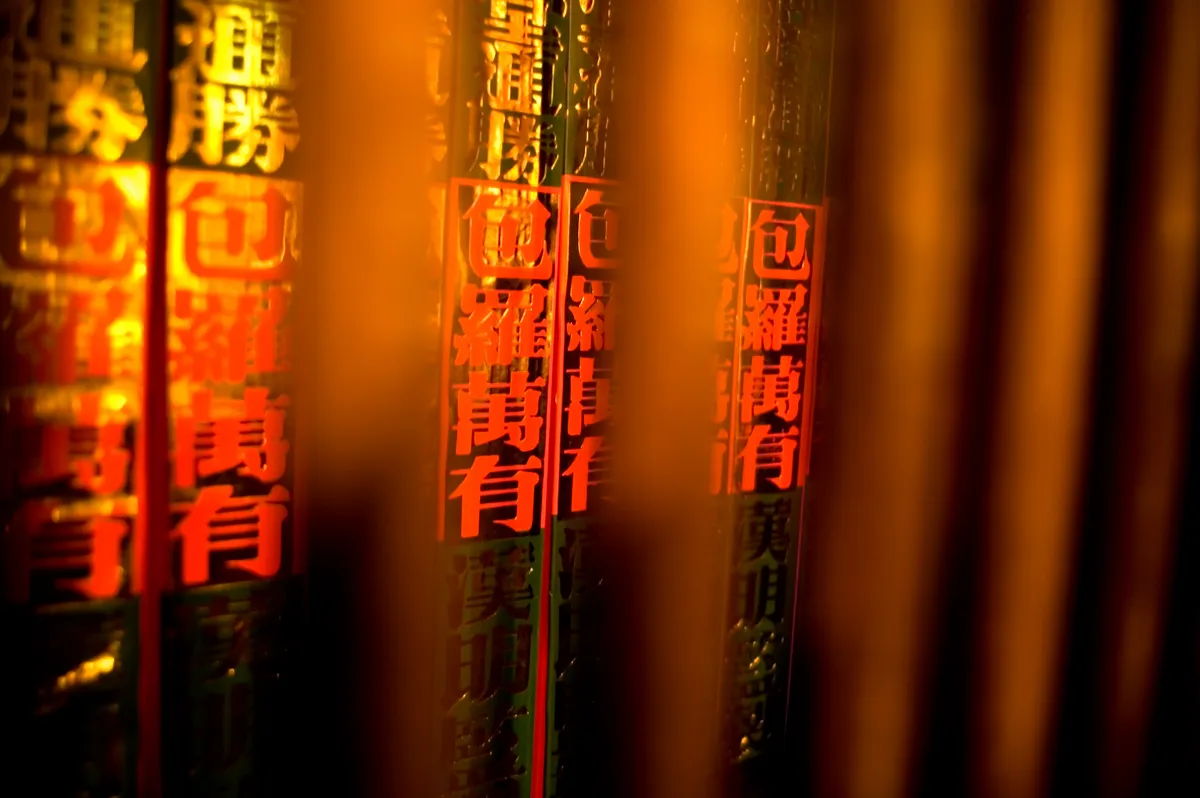
The Tong Shu (通書, tōngshū) is the Chinese folk almanac: a booklet that lists, day by day, what the calendar says about that day. It is also called 黃曆 (huánglì). In Hong Kong, people say 通勝 (tung sing): in Cantonese, 書 sounds like 輸, to lose, and 勝 means to win.
The rules come from the official calendar of the empire. Under the Qianlong Emperor, the court had them laid down in the 欽定協紀辨方書 (Xiéjì biànfāng shū), completed around 1740, in 36 parts (卷). These pages rest on it: for each field, the ⓘ shows which part gives the rule.

How we calculate
Each day is the calendar day in UTC+8, from midnight to midnight in China. The almanac month begins at the 節, the solar term that opens a month, and the year at 立春. We calculate the solar terms and the new moons ourselves, with Astronomy Engine, as on the Chinese calendar page.
The almanac runs from the start of 1900 (31 January, the first day of the Chinese year 庚子) to the end of 2053: the range of our check data. We compared every field day by day with lunar-python, an open-source library for the Chinese calendar. We deliberately differ on two points: for the taboos of Peng Zu we follow the short form from the book, and for the day star we get a different result in nine of the 154 years (see below). On 27 test days from the research we build on, all fields match.
Classical core and folk layer
The classical core follows the 協紀辨方書. It includes the twelve officers of the day (建除); the twelve guardians of the day (值神), divided into the yellow and the black path; the mansion of the day; the nine stars; the clash and the 煞, an unfavourable direction; the taboos of Peng Zu; and the special days 天赦, 四離 and 四絕.
Many almanacs also print days from folk belief: the Three Ladies days, the Master Yang days and the forbidden days of the month. The 協紀辨方書 itself rejects the Master Yang days (卷36, 辨訛, ‘errors corrected’). That is why we show them separately, as the folk layer.
Where each rule comes from
For each field, the ⓘ shows which part of the 協紀辨方書 the rule comes from. Most fields follow a rule stated there word for word (primary source).
For three fields, the book gives no conclusive rule: the mansion of the day, the day star and the fetus spirit. There, we follow the practice of the later almanacs; we set the rule by comparison with lunar-python and then checked it separately.
The mansion of the day is a running count of 28, one per day. To find it, take the Julian day number, add 11 and divide by 28. The remainder is the number of the mansion, where 0 stands for 角, the first mansion. The book gives the count, but not the starting number 11: we chose it so that the result matches lunar-python, an open-source calendar library. The count says nothing about the position of the Moon.
The table of the fetus spirit (胎神) is not in the 協紀辨方書 but in the later almanacs (時憲書 and 通書).
The day star
After the winter solstice (冬至), the day star counts up from 一白; after the summer solstice (夏至), it counts down from 九紫. The direction changes on the 甲子 day closest to the solstice. This rule is not in the 協紀辨方書 word for word; it is the usual method of the almanacs.
Because the book does not give this changeover, almanacs can differ: another almanac may show a different day star in the weeks after 冬至. lunar-python, the library we compare with, also shows a different day star in nine of the 154 years, each time between 1 January and about 20 January.
The taboos of Peng Zu (彭祖百忌)
We follow the text of the 協紀辨方書 (卷35), including 壬不決水 and 戌不乞狗. Popular almanacs print a longer form of eight characters with different words, such as 戌不吃犬; it is shown with each day as a variant.
Time zone and historical dates
The almanac works in China Standard Time (UTC+8), like the Chinese calendar page. A day therefore begins at midnight in China, which is 4 p.m. UTC. Your own calendar day can therefore differ from the date of the almanac.
Before 1929, the Chinese calendar used the local time of Beijing. In November 1914, February 1916 and November 1920, a new moon falls so close to midnight that the date here differs by one day from historical editions.
Favourable and unfavourable (宜 and 忌)
Printed almanacs also list, for each day, what is favourable (宜) and unfavourable (忌). Those lists are not here yet: the table in the book has not been fully transcribed, and we are first checking the lists that were rebuilt for us from the rules of the book.
What this almanac does not do
- It gives no advice: it describes what tradition says about a day.
- It gives no personal result. For your own pillars, there is the BaZi calculator.
- It does not yet list favourable and unfavourable activities (宜 and 忌).
- It does not work with hours: the almanac belongs to a whole day in UTC+8.
Sources
- 欽定協紀辨方書 (Xieji Bianfang Shu), 36 parts, Qing court, around 1740: the scan of the Bavarian State Library (via archive.org) and the transcription on Wikisource. archive.org · zh.wikisource.org
- lunar-python (6tail): open-source library for the Chinese calendar, used for comparison, not as a source. github.com
- Astronomy Engine (Don Cross): the solar terms and the new moons. github.com
- The source research on the Tong Shu for this site (November 2026), with the calculation rules per field and 27 test days.